Mantra Meditation: Unlocking the Sacred Sound Within

In the cacophony of modern life, the search for stillness, focus, and inner peace often feels elusive. Amidst the distractions of daily responsibilities and digital overstimulation, an ancient practice continues to offer a simple yet profound pathway inward: mantra meditation. Rooted in some of the world’s oldest spiritual traditions, mantra meditation utilizes the power of sacred sound to quiet the mind, awaken consciousness, and connect the practitioner to a deeper reality.
This article explores the essence of mantra meditation—its origins, psychological benefits, spiritual underpinnings, and techniques—revealing how this timeless practice can help unlock the sacred sound within every individual.
The Meaning of Mantra
The word mantra is derived from the Sanskrit roots manas (mind) and tra (tool or instrument), meaning “a tool of the mind” or “that which protects the mind.” More than just a repeated word or sound, a mantra is considered a vibrational formula, charged with spiritual energy and capable of transforming consciousness when used correctly.
Traditionally, mantras are chanted, whispered, or silently repeated during meditation. The repetition serves to quiet the fluctuations of the mind (chitta vritti nirodha, as described in the Yoga Sutras of Patanjali) and redirect awareness toward the inner self, or atman.
Historical and Spiritual Roots
Vedic and Yogic Traditions
Mantra meditation finds its earliest expression in the Vedas, the sacred texts of ancient India, composed over 3,000 years ago. Vedic mantras were originally chanted in rituals and sacrifices to invoke divine energies, harmonize with cosmic forces, and uphold the order of the universe (rita).
Over time, in yogic and Tantric traditions, mantras evolved from external ritual tools into internal methods for self-realization. Yogis realized that sound, particularly when consciously and rhythmically applied, could serve as a bridge between the finite human self and the infinite.
In Vedic astrology, mantras also help to mitigate the negative effects of malefic planets and enhance the beneficial effects of benefic planets.
The Power of Sound (Nāda)
According to Nāda Yoga, the universe originated from primal sound (nāda bindu), often conceptualized as Om or Aum. Mantras are seen as microcosmic echoes of this universal sound. Chanting a mantra aligns the individual with the primordial vibration of the universe, facilitating harmony, clarity, and transcendence.

Scientific Understanding of Mantra Meditation
While the spiritual dimensions of mantra meditation are profound, modern science has begun to validate its psychological and neurological benefits.
Cognitive and Emotional Benefits
Numerous studies show that mantra meditation can:
- Reduce stress and anxiety by activating the parasympathetic nervous system.
- Improve focus and attention by reducing the default mode network (DMN) activity, which is associated with mind-wandering.
- Enhance emotional regulation, leading to greater resilience and well-being.
A 2015 study in Brain and Behavior found that silently repeating a mantra reduced intrusive thoughts and created a quiet mind within minutes, showing how mantras engage the brain differently than other forms of silent meditation.
Neuroplasticity and Sound Vibration
The rhythmic repetition of mantras also influences neuroplasticity, the brain’s ability to rewire itself. The vibratory quality of spoken mantras can create beneficial resonances in the body, especially in the vagus nerve, which connects the brain to vital organs and plays a key role in relaxation and emotional balance.
Types of Mantras
Mantras vary in origin, purpose, and complexity. Here are some main categories:
1. Bīja (Seed) Mantras
These are single-syllable sounds that encapsulate primal energies. Examples include:
- Om – the universal sound, representing the totality of existence.
- Hrīm, Krīm, Shreem – seed sounds representing specific deities or energies.
Bīja mantras are potent and require proper initiation or guidance due to their subtle power.
2. Sanskrit Mantras
These are longer phrases often invoking divine forms, qualities, or cosmic principles. Examples:
- Om Namah Shivaya – “I bow to Shiva,” representing transformation and consciousness.
- Om Mani Padme Hum – a Tibetan mantra invoking compassion and wisdom.
3. Personal Mantras
In some traditions (like Transcendental Meditation), practitioners are given personalized mantras by a teacher. These are typically kept secret and are designed to match the individual’s vibrational signature.
4. Affirmative Mantras (Modern Adaptations)
These are English or vernacular phrases, like “I am peace” or “I am love.” While not traditional in origin, they can be effective in aligning the mind with a positive frequency, particularly for beginners.
The Practice of Mantra Meditation
How to Begin
You don’t need elaborate rituals or advanced training to start mantra meditation. Here’s a simple approach:
1. Choose Your Mantra
Pick a mantra that resonates with you. If you’re drawn to spiritual traditions, a Sanskrit mantra like Om Namah Shivaya might feel meaningful. If you’re starting out, even simple sounds like Om or affirmations can be powerful.
2. Find a Quiet Space
Sit comfortably with a straight spine. You can close your eyes to minimize external distractions.
3. Repetition (Japa)
Repeat the mantra silently, audibly, or mentally. Focus entirely on the sound and rhythm.
- Use a mala (rosary) with 108 beads to keep count.
- Keep a gentle and steady pace, letting the mantra guide your breathing.
4. Let Go of Effort
As the mind quiets, the mantra may begin to repeat itself automatically (ajapa japa). Allow this natural repetition without forcing it.
5. End Gently
After 10–20 minutes, stop repeating the mantra and sit in silence for a few minutes, letting its vibration settle in your awareness.
Advanced Practices
For those deepening their practice, the mantra can become a mantra sadhana, a disciplined and sustained spiritual effort. This often involves:
- Daily repetition for a set number of rounds.
- Initiation from a qualified teacher.
- Alignment with specific lunar or astrological timings.
- Integration with pranayama, asana, or ritual.
Tantric and Vedic systems may also involve nyasa (energizing different parts of the body with the mantra) or yantra (visual geometrical counterparts to mantras) for a multidimensional experience.

Psychological Mechanisms Behind Mantra Meditation
The Mantra as an Anchor
The mantra serves as a focal point for attention, replacing the usual mental chatter. Repetition builds concentration (dharana), which is the prerequisite for meditation (dhyana) and ultimately spiritual absorption (samadhi).
Interrupting Negative Thought Loops
Because the mantra occupies the verbal and auditory processing centers of the brain, it naturally inhibits ruminative thinking, worry, and fear. This provides relief for those struggling with anxiety, depression, or trauma.
Building Inner Sacredness
Over time, the mantra becomes more than a sound—it becomes a sacred presence within. The practitioner feels the mantra not as something they are doing, but as something they are being.
The Spiritual Goal: Union with the Inner Self
While mantra meditation has practical benefits, its ultimate aim—especially in traditional systems—is liberation (moksha), union with the divine, or realization of the true Self.
In Bhakti Yoga, mantras are offerings of love to a personal deity.
In Jnana Yoga, they are tools to penetrate illusion and awaken awareness.
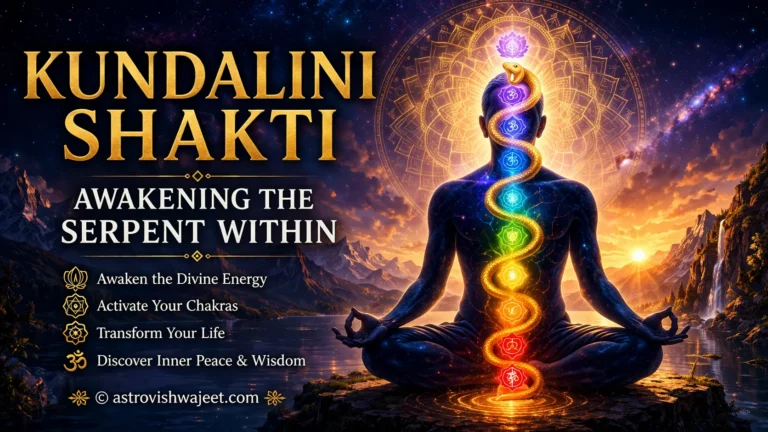
In Kundalini Yoga, mantras are used to activate energy centers and awaken latent potential.
Whatever the path, the mantra serves as a bridge between the ordinary mind and the eternal consciousness that lies beyond it.
Common Challenges and How to Overcome Them
1. Wandering Mind
Solution: Gently bring your focus back to the mantra without judgment. Think of it as training a muscle.
2. Doubt About Effectiveness
Solution: Trust the process. Even if you don’t feel immediate results, subtle changes are happening.
3. Restlessness or Sleepiness
Solution: Practice when you’re alert. Sit with an upright posture and consider chanting aloud to engage more fully.
Testimonials from Practitioners
“Repeating my mantra every day has been a lifeline. It pulls me out of my head and back into my heart.”
— Priya R., Yoga Teacher
“Mantra meditation has helped me manage anxiety better than any medication. I feel more centered and grounded.”
— James M., Software Engineer
“The mantra started as just a sound. Now, it feels like a living presence inside me.”
— Meena D., Spiritual Counselor
Suggested Mantras for Beginners
| Mantra | Meaning | Tradition |
|---|---|---|
| Om | The universal vibration | Vedic |
| So Hum | “I am That” | Upanishadic |
| Om Namah Shivaya | “I bow to Shiva (consciousness)” | Shaivism |
| Lokah Samastah Sukhino Bhavantu | “May all beings be happy and free” | Karma Yoga |
| Om Mani Padme Hum | Jewel in the lotus (compassion and wisdom) | Tibetan Buddhism |
Conclusion: The Mantra as Sacred Key
In a world increasingly dominated by noise, distraction, and mental fragmentation, mantra meditation offers a sacred key to unlock inner harmony and transcendence. Whether you’re seeking emotional peace, spiritual awakening, or simply a few moments of mental stillness, the mantra can meet you where you are and carry you to where you need to be.
Ultimately, the sacred sound of the mantra is not separate from you. It is the vibration of your own soul, waiting to be heard, felt, and lived. When you chant, whisper, or silently repeat your mantra, you’re not just practicing a technique—you’re entering into a dialogue with the deepest part of yourself.
So close your eyes, take a breath, and listen.
The sacred sound is already within you.