How To Do Meditation In The Correct Way

In today’s fast-paced world, where stress, anxiety, and distractions dominate daily life, meditation stands as a powerful tool to find peace, clarity, and inner strength. But meditation is not just about sitting still with your eyes closed—it’s a disciplined practice that, when done the right way, can transform your life in unimaginable ways.
Whether you’re a beginner or someone looking to deepen your practice, this article will guide you step-by-step on how to do meditation in the correct way—covering preparation, techniques, postures, common mistakes, and tips to build a sustainable routine.
What is Meditation?
Meditation is a mental exercise that involves focusing the mind on a particular object, thought, or activity to train attention, awareness, and achieve mental clarity and emotional calmness. Rooted in ancient spiritual traditions like Hinduism, Buddhism, and Jainism, meditation has now gained global recognition for its psychological, emotional, and physical benefits.
Why Do Meditation? Benefits of Correct Practice
When practiced correctly, meditation offers numerous benefits:
- Mental Clarity: Helps declutter your thoughts and improves focus.
- Emotional Balance: Reduces stress, anxiety, and promotes emotional healing.
- Better Sleep: Improves sleep quality and reduces insomnia.
- Self-Awareness: Encourages self-reflection and personal growth.
- Spiritual Growth: Deepens the connection with your inner self and higher consciousness.
Before You Begin: Set the Right Foundation
1. Choose a Quiet and Clean Space
- Select a quiet corner in your home or outdoors.
- Ensure the place is tidy and free from distractions.
- You may place a mat, cushion, or meditation seat.
2. Wear Comfortable Clothing
- Opt for loose-fitting, clean clothes to avoid any physical discomfort.
3. Decide the Time
- Early morning (Brahma Muhurta – around 4 AM to 6 AM) is considered the best.
- Alternatively, pick a time when your mind is calm and free.
4. Empty Your Stomach
- Meditate either on an empty stomach or at least 2 hours after a meal.
5. Set an Intention
Before starting, take a moment to mentally say:
“I am here to connect with my inner self. I will be patient and open.”
Correct Meditation Postures
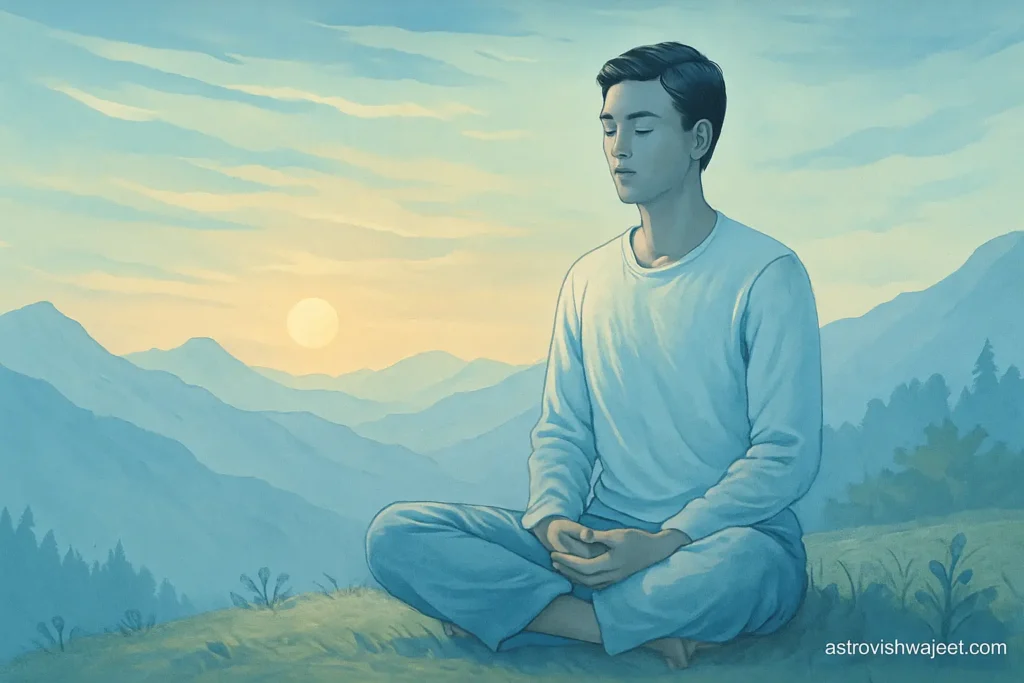
The body’s posture influences the mind’s state. Maintain a posture that keeps your spine erect but relaxed.
Recommended Sitting Postures:
- Padmasana (Lotus Pose)
- Sukhasana (Easy Pose)
- Vajrasana (Thunderbolt Pose)
- Chair Sitting – for those with back or knee issues.
Posture Tips:
- Keep your spine straight and shoulders relaxed.
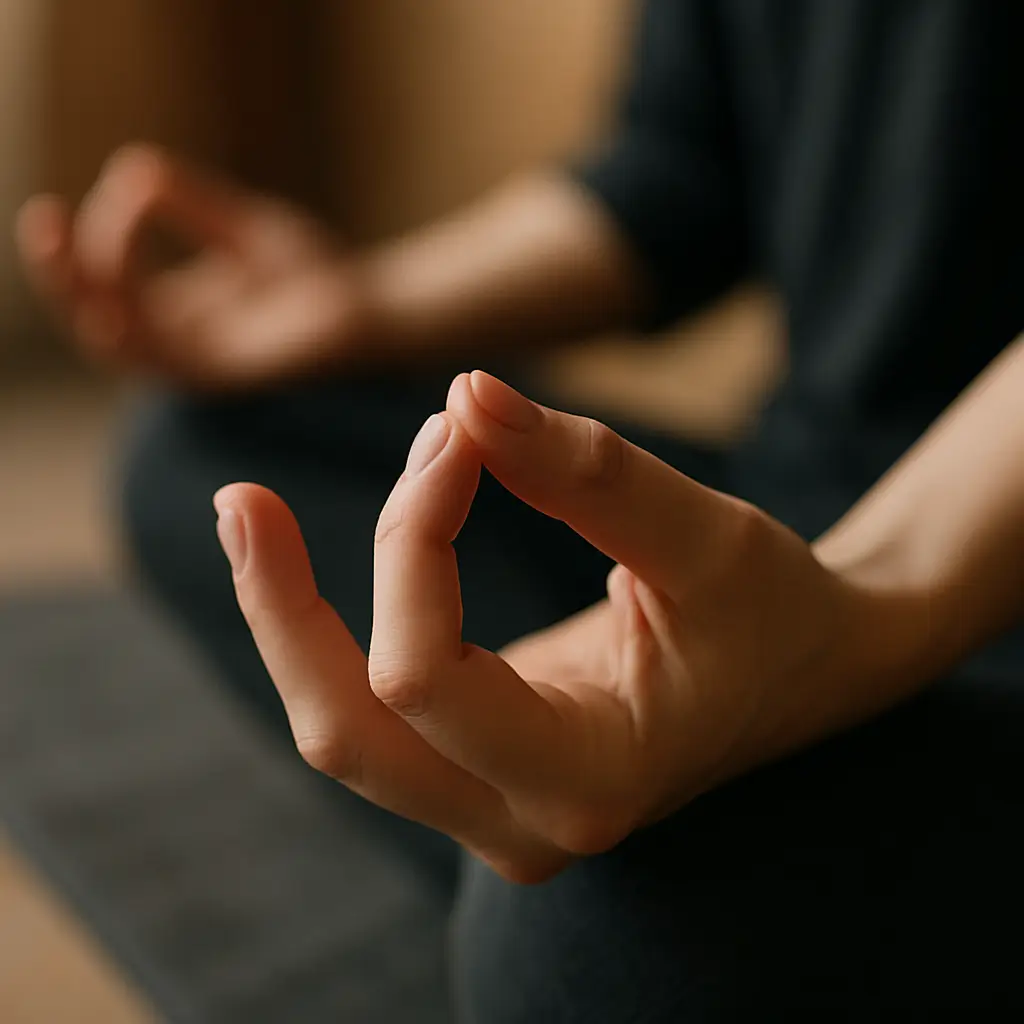
- Hands resting on knees or lap (palms facing up or down).
- Chin parallel to the floor.
- Eyes gently closed or half-open.
“The quieter you become, the more you can hear.” – Ram Dass
Step-by-Step Guide: How To Meditate in the Right Way
Step 1: Prepare and Sit
- Sit in your chosen posture.
- Close your eyes gently.
- Take 2-3 deep breaths to calm the body.
Step 2: Focus on the Breath
- Begin by observing your natural breath.
- Feel the air entering and leaving through the nostrils.
- Don’t try to control it—just observe.
Why Breath? The breath is always present, and focusing on it anchors the mind to the present moment.
Step 3: Be Aware of the Mind
- Your mind will wander. It’s natural.
- Gently bring it back to the breath or your focus point.
Step 4: Use a Technique (Optional)
To deepen your practice, use one of the following techniques:
a) Mantra Meditation
- Repeat a sacred word or mantra like “Om,” “So-Ham,” or “Ram.”
- Synchronize the mantra with your breath.
b) Mindfulness Meditation
- Observe thoughts, emotions, and sensations as they arise—without judgment.
- Simply note them and return to the breath.
c) Visualization
- Visualize a divine light, a peaceful scene, or your chosen deity.
- Let the image fill your mind.
d) Body Scan
- Bring awareness slowly to each part of the body—from toes to head.
- Notice sensations, release tension.
Step 5: Deepen Awareness
- As thoughts arise, don’t react.
- See them like clouds passing in the sky.
- Your job is to observe, not engage.
Step 6: End Gently
- After 10–30 minutes (or your chosen time), slowly bring awareness back to the body.
- Move your fingers and toes.
- Gently open your eyes.
How Long Should You Meditate?
For beginners:
- Start with 5–10 minutes daily.
Gradually increase:
- 20–30 minutes per session is ideal for most people.
- Even 5 minutes of correct meditation is better than 30 minutes of distraction.
Common Mistakes and How to Avoid Them
| Mistake | Correction |
|---|---|
| Forcing the mind to stop thinking | Observe the thoughts without reacting |
| Slouching or tensing the body | Maintain relaxed awareness |
| Expecting instant results | Be patient; meditation is a journey |
| Being irregular | Make it a daily habit |
| Choosing too many techniques at once | Stick to one method initially |
Tips to Make Your Meditation Practice Successful
1. Consistency is Key
- Meditate at the same time and place every day to establish a consistent habit.
2. Start Small
- Don’t aim for perfection—just show up each day.
3. Keep a Journal
- Write down your experiences, insights, or challenges.
4. Use Guided Meditations
- Beginners may benefit from guided audio or apps to build focus.
5. Join a Group
- Meditating with a group or mentor helps deepen practice.
6. Be Kind to Yourself
- Every session won’t be perfect. That’s okay. What matters is showing up.
Spiritual vs. Secular Meditation: Which One Is Correct?
There’s no one-size-fits-all answer. Both approaches are valid:
- Spiritual Meditation includes devotion, mantras, or divine connection.
- Secular Meditation focuses on mindfulness and present awareness.
Choose the path that resonates with your belief system and personality.
Signs You Are Meditating Correctly
- Increased calmness and emotional control
- Improved focus and decision-making
- Decreased reactivity to stress
- Feeling connected to your inner self
- Greater self-awareness and compassion
You may or may not experience visions, bliss, or deep silence in the beginning—and that’s perfectly fine. Correct meditation is not about “what you feel” but about your sincere presence and attention.
Advanced Practices (After 2–3 Months of Regular Practice)
Once you’re comfortable with basic meditation, you may explore:
- Pranayama (breath control before meditation)
- Trataka (candle-gazing for concentration)
- Japa (chanting mantras with a mala)
- Dhyana Yoga (deep meditation for spiritual progress)
- Chakra Meditation (energy center activation)
But always master the basics before moving on to advanced techniques.
Scientific Backing of Meditation
Modern research supports the ancient wisdom of meditation. Studies show that:
- MRI scans reveal increased grey matter in areas linked to memory and learning.
- Cortisol levels (stress hormone) drop with regular meditation.
- Mindfulness-Based Stress Reduction (MBSR) has been proven effective for anxiety, depression, and PTSD.
Meditation rewires the brain for resilience, compassion, and clarity.
Conclusion: Meditation is a Journey, Not a Destination
Learning to meditate the correct way is not about becoming a monk or escaping the world—it’s about becoming more present, peaceful, and powerful in your own life.
Whether you do it for 5 minutes or an hour, what matters is your intention, sincerity, and regularity. Remember: the mind is like a muscle—the more you train it through meditation, the more control and freedom you gain.
So, find your space. Sit down. Breathe. And begin the beautiful inner journey.