Pitra Dosha in Vedic Astrology: Meaning, Causes, Effects, and Remedies

In Vedic astrology, one of the most discussed yet often misunderstood planetary afflictions is Pitra Dosha (also spelled Pitru Dosha). It’s a concept that connects our present life with ancestral karma, suggesting that unresolved actions or debts from our forefathers can influence our destiny. Far from being a mere superstition, Pitra Dosha is deeply rooted in the spiritual framework of karma and lineage continuity — a reminder that our lives are part of a larger ancestral chain.
This article explores Pitra dosha in Vedic astrology, its meaning, causes, astrological combinations, symptoms, and remedies, with practical insights from classical Vedic texts and traditional practices.
What Is Pitra Dosha?
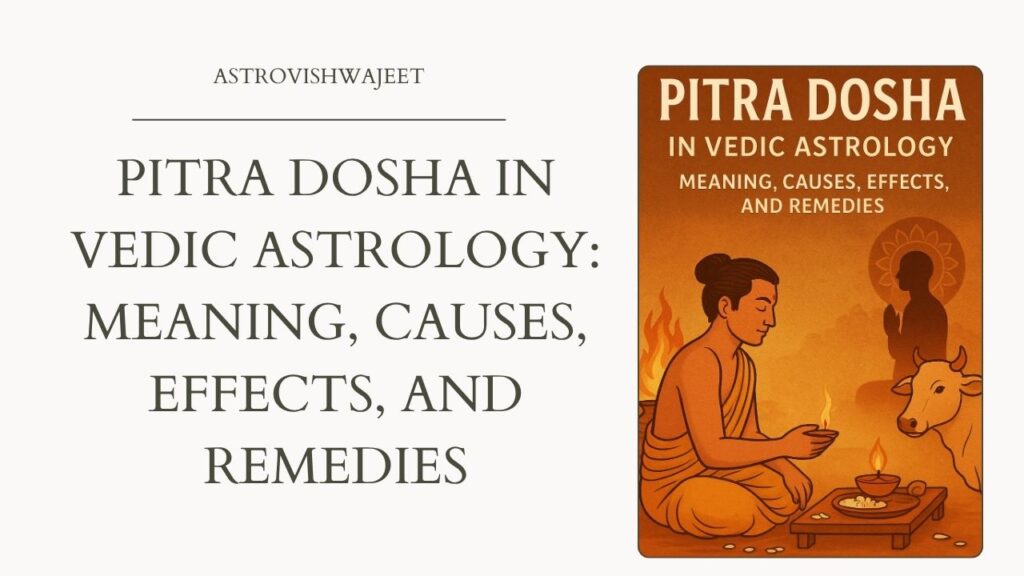
The term “Pitra” (or Pitru) in Sanskrit refers to “forefathers” or “ancestors,” and “Dosha” means a fault, imbalance, or affliction. Pitra Dosha, therefore, means a karmic imbalance in the horoscope that arises due to the unfulfilled duties or unresolved actions of one’s ancestors, particularly on the paternal side.
According to Vedic philosophy, when our ancestors leave the world with certain unfulfilled desires, wrongful deeds, or unbalanced karmic accounts, these energies may manifest as obstacles in the lives of their descendants. This condition in the horoscope is known as Pitra Dosha.
It’s not necessarily a curse, as it’s often portrayed. Rather, it’s an opportunity — a spiritual responsibility to honor and balance ancestral energies through right action, rituals, and devotion.
The Spiritual Foundation of Pitra Dosha
In Hindu tradition, there’s a deep belief that the departed souls of ancestors continue to exist in subtle realms. They depend on the living descendants to perform specific rites, such as Shraddha and Tarpan, to attain peace and liberation (moksha). When these duties are neglected, the souls may remain restless, creating an imbalance that reflects in the family’s energy field and, astrologically, in the kundli (birth chart).
The Garuda Purana and Brahma Purana describe how ancestors can influence their descendants’ prosperity, health, and mental peace. Hence, propitiating them through proper rituals is seen as a sacred duty (pitra rin — the ancestral debt).
Pitra Dosha, therefore, symbolizes an ancestral karmic link that needs healing — not through fear, but through gratitude and service.
Astrological Causes of Pitra Dosha
In astrology, Pitra Dosha arises from specific planetary combinations that reflect an imbalance in the ancestral line. The Sun, being the karaka (significator) of father and lineage, plays a central role. The ninth house, which represents one’s ancestors, dharma, and fortune, is equally important.
Here are some common combinations that can create Pitra Dosha:
1. Sun Afflicted by Malefic Planets
If the Sun is afflicted by malefics like Rahu, Ketu, and Saturn — especially in the 9th, 1st, or 10th houses — it may indicate ancestral disharmony or unfulfilled duties from the paternal line.
Example: Sun conjunct Rahu (Grahan Yoga) is one of the strongest indicators of Pitra Dosha.
2. Affliction to the Ninth House or Its Lord
The ninth house represents father, guru, and past-life karma. When it’s occupied or aspected by malefics, or its lord is weak or debilitated, it shows that ancestral blessings are blocked or karmic debts are pending.
3. Rahu–Ketu Influence
Rahu and Ketu represent past-life karmas and unresolved desires. When either of them afflicts the Sun or the ninth house, it often indicates Pitra Dosha. For instance, Rahu in the ninth house or with the Sun can show dissatisfaction or unrest among ancestors.
4. Planetary Combinations Mentioned in Classics
Some traditional texts outline specific yogas:
- Sun in conjunction with Rahu/Ketu or Saturn.
- Sun and Moon are in Rahu/Ketu Nakshtra.
- The Moon is afflicted in the fourth house, representing mother and family peace.
- Sun and Moon are badly afflicted or conjunct with Rahu and Ketu in Trik Bhav.
5. Incomplete Rituals or Neglected Ancestral Duties
Even if the planetary combinations are mild, neglecting traditional Shraddha, Tarpan, or remembrance of ancestors can activate dormant doshas. Vedic astrology views this not merely as fate, but as a result of neglected spiritual responsibility.
Types of Pitra Dosha
While the general meaning is the same, astrologers often classify Pitra Dosha based on its cause:
- From the Father’s Side:
Usually linked with affliction to the Sun or the ninth house. It can manifest as issues with authority, health problems, or obstacles in career and reputation. - From the Mother’s Side:
Seen when the Moon or fourth house is afflicted. It may bring emotional instability, lack of peace at home, or relationship issues. - From the Ancestors’ Karma (Lineage):
Shown through Rahu-Ketu afflictions in key houses (1st, 5th, 9th). It can lead to recurring problems across generations — delayed marriage, childlessness, or financial instability.
Effects of Pitra Dosha
The effects of Pitra Dosha vary depending on the strength of afflictions, placement of benefic planets, and overall chart balance. However, common signs include recurring obstacles, unexplained delays, and emotional disturbances.
1. Family and Domestic Issues
Frequent disagreements among family members, lack of unity, or premature deaths in the family can be indicators of ancestral imbalance. In some cases, families face repetitive patterns — like financial losses or relationship breakdowns — generation after generation.
2. Delayed Marriage or Childbirth
One of the classic effects is delay or difficulty in marriage and progeny. The dosha is believed to create karmic blocks that delay fulfillment of family life until ancestral peace is restored.
3. Financial Struggles
Despite hard work and talent, natives may face instability or sudden losses. Rahu’s influence can create material instability or deceptive opportunities.
4. Career and Reputation Problems
When the Sun or the ninth house is afflicted, natives may struggle to gain recognition or face frequent changes in career. The blessing of mentors (guru kripa) may be missing until remedies are performed.
5. Emotional and Mental Turmoil
Since Pitra Dosha is karmic and spiritual in nature, it often manifests as unexplained sadness, guilt, or anxiety. People may feel stuck or disconnected from purpose.
It’s important to remember that these effects are not “punishments.” They are lessons — opportunities to resolve deeper ancestral energies and move toward balance.
Recognizing Pitra Dosha Beyond Astrology
Astrology provides a symbolic map, but sometimes Pitra Dosha reveals itself through life patterns rather than a chart. Some traditional signs that hint toward ancestral imbalance include:
- Repeated miscarriages or childless couples in the family.
- Dreams or disturbances involving ancestors.
- Family history of early deaths or sudden accidents.
- Ritual neglect — no Shraddha performed for generations.
- Success that fades suddenly or without a logical reason.
Such signs are not definitive proof but indicators that ancestral healing might be beneficial.

Remedies for Pitra Dosha
Remedies (Upayas) for Pitra Dosha are among the most compassionate aspects of Vedic astrology. They aim not to “cancel” the dosha but to harmonize the energy — to honor ancestors, resolve their unfulfilled desires, and invite blessings.
Here are the most effective and time-tested remedies:
1. Performing Pitra Tarpan and Shraddha
This is the primary and most important remedy. It’s performed annually during Pitru Paksha (the fortnight of ancestors) — typically in the Krishna Paksha of Bhadrapada month (September–October).
- Offer water, sesame seeds, and prayers to ancestors.
- Perform Tarpan at sacred rivers or at home under the guidance of a priest.
- Feed Brahmins, cows, or the poor in their memory.
The belief is that when these offerings are made with sincerity, the ancestors bless the family with peace and prosperity.
2. Donation and Charity (Daan)
Donating in the name of ancestors helps release karmic burdens. Items like food, clothes, and money can be offered to the needy, especially on Amavasya (new moon days) or during Pitru Paksha.
Feeding crows, cows, dogs and offering food to Brahmins are considered sacred acts that bring balance to ancestral energy.
3. Worship of the Sun
Since the Sun represents the father and the soul connection to ancestors, offering daily water (Arghya) to the rising Sun while reciting the “ॐ सूर्याय नमः” or “ॐ घृणि सूर्याय नमः” helps strengthen lineage energy and clear ancestral blocks.
4. Recitation of Mantras
Certain mantras help pacify restless ancestral energies:
- Om Namo Bhagavate Vasudevaya – for general peace.
- Maha Mrityunjaya Mantra – for liberation of souls.
- Om Pitru Devaya Namah – dedicated to ancestors.
- Gayatri Mantra – for purification and spiritual elevation.
Regular chanting, especially on Amavasya or during Pitru Paksha, is considered highly beneficial.
5. Service to Parents and Elders
Honoring and serving one’s living parents is one of the most direct and powerful remedies for Pitra Dosha. The Manu Smriti and Mahabharata both emphasize that serving parents and teachers equates to serving the ancestors themselves.
Forgiveness, gratitude, and care for elders naturally dissolve ancestral imbalances.
6. Visiting Holy Places
Certain pilgrimage sites are known for ancestral healing:
- Gaya (Bihar) – the most important place for Pinda Daan.
- Varanasi (Kashi)
- Haridwar
- Badrinath, Rameshwaram, and Trimbakeshwar
Performing Tarpan or Pinda Daan at these places brings peace to departed souls and relief to the descendants.
7. Lighting a Lamp for Ancestors
Lighting a sesame oil lamp facing south (the direction of ancestors) on Amavasya or during Pitru Paksha is a symbolic gesture of remembrance and guidance for the departed souls.
8. Astrological Remedies
Depending on the horoscope, astrologers may suggest:
- Wearing gemstones (like Ruby for Sun or Pearl for Moon). Gemstones need to be worn under the guidance of an Astrologer.
- Performing Narayan Nagbali and Tripindi Shraadha.
- Avoid non-veg on Sunday and chant Aditya Hridaya Stotra.
- Donating items related to afflicted planets (e.g., copper for Sun, black sesame for Saturn).
However, these should be done only under expert guidance after chart analysis.
Pitra Paksha: The Fortnight of Ancestors
Pitru Paksha is the most sacred period for ancestral remembrance in the Hindu calendar. It usually lasts for 15 lunar days when the Sun transits Virgo and the Moon wanes. During this time, it’s believed that the souls of ancestors visit the earth to bless their descendants.
Rituals like Shraddha, Pinda Daan, and Tarpan are performed to express gratitude and ensure the ancestors’ peaceful journey toward light. Even a simple offering of food and water, made with faith, carries immense spiritual merit.
Misconceptions About Pitra Dosha
Pitra Dosha is often misunderstood or exaggerated. Here are a few clarifications:
- It’s not a curse. It’s a karmic connection that calls for awareness, not fear.
- Not everyone with a Rahu-Sun conjunction has severe Pitra Dosha. The whole chart must be analyzed holistically.
- Remedies are about gratitude, not superstition. Simple acts of remembrance, charity, and prayer can be powerful.
- It doesn’t mean life-long suffering. Once acknowledged and balanced, ancestral blessings often bring rapid improvements.
The Psychological and Spiritual Dimension
From a modern perspective, Pitra Dosha also symbolizes intergenerational patterns — emotional, behavioral, or financial patterns passed down through families. Many psychologists now recognize that unresolved trauma or beliefs can echo through generations.
In that sense, the spiritual remedies for Pitra Dosha — forgiveness, remembrance, charity — are deeply therapeutic. They help people make peace with their past and release subconscious burdens.
When you honor your ancestors with love, you’re not only healing them but freeing yourself from inherited limitations.
Conclusion
Pitra Dosha, in essence, reminds us that our lives are not isolated events but part of a larger karmic tapestry. Our ancestors’ actions, blessings, and unfulfilled desires continue to influence us until we consciously acknowledge and harmonize them.
Through sincere remembrance, service, and rituals like Shraddha and Tarpan, one can dissolve ancestral debts and invite peace, prosperity, and spiritual growth. In doing so, we not only liberate our ancestors but also set our future generations free from karmic repetition.
As the Garuda Purana beautifully says:
“When ancestors are content, the family flourishes; when they are displeased, progress is obstructed.”
Understanding and addressing Pitra Dosha is therefore not about fear — it’s about gratitude, healing, and continuity of love across generations.