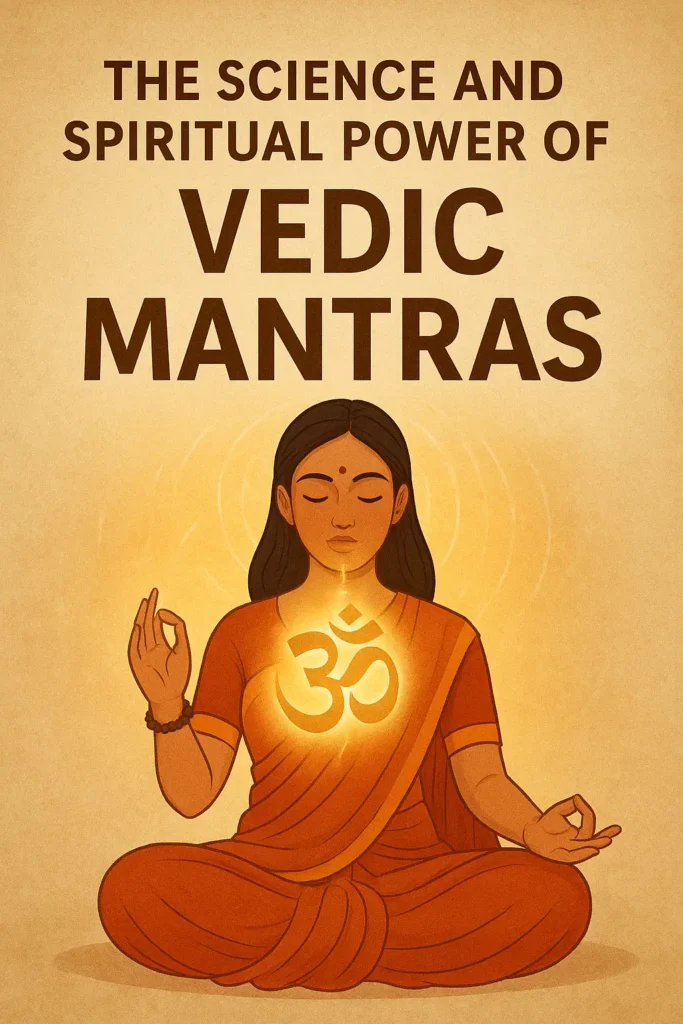
The Science and Spiritual Power of Vedic Mantras

Vedic mantras have been recited for thousands of years, yet their appeal feels just as strong today. They show up in homes, temples, yoga studios and meditation centres around the world. Many people chant them for peace or devotion, while others use them for focus, healing or emotional balance. What makes these ancient sounds so special? The answer sits at the meeting point of spirituality, linguistics, psychology and subtle sound science.
This article explores how Vedic mantras work, why they affect the mind the way they do, and what modern research suggests about the role of sound and vibration in human wellbeing. It also looks at how mantras shape spiritual practice and why they continue to be relevant in an age defined by technology and distraction.
What Are Vedic Mantras?
Vedic mantras are sacred sound formulas found in the four Vedas. They were first transmitted orally by rishis who preserved every syllable with remarkable precision. These mantras are written in Vedic Sanskrit, a language with a rich phonetic structure. Unlike ordinary speech, mantras are arranged in specific patterns based on intonation, pitch and rhythm. Their power lies not only in meaning but in the precise vibration created when they are chanted correctly.
At the most basic level, a mantra is a combination of sound waves. At a deeper level, it is considered an instrument for the mind. The word “mantra” is often broken into two parts: “man” for mind and “tra” for protection or liberation. This gives a simple idea of why practitioners use mantras to calm thought patterns, reduce stress and sharpen concentration.
The Sound Structure of Vedic Mantras
Vedic Sanskrit is built on fifty basic sounds, each believed to be linked with a specific point in the vocal tract and subtle corresponding energy in the body. Every sound is placed intentionally. This means that changes in pronunciation can change the effect of the mantra.
Many Vedic mantras use combinations of long and short syllables, controlled pauses and precise stresses. This structure creates rhythmic patterns that influence breathing and heart rate. For example:
- Short syllables create quick vibrations and stimulate alertness.
- Long syllables create deeper resonance and promote relaxation.
- Repeating specific phonetic clusters can stimulate the parasympathetic nervous system, which helps reduce stress.
The sophistication of this sound design explains why mantras continue to fascinate neuroscientists and linguists. The rishis may not have used modern scientific terms, but they had a clear understanding of how sound influences consciousness.
How Mantras Affect the Brain
Scientific studies over the last few decades show that repeating mantras can produce measurable changes in the brain. Researchers who examine mindfulness practices often include mantra recitation because of its distinct neurological effects.
1. Activation of Relaxation Responses
Chanting slows breathing and stabilises heart rate. This stimulates the vagus nerve and activates the parasympathetic nervous system. As a result, the body enters a calmer state. Stress hormones decline, and the mind shifts away from anxious thought loops.
2. Improved Focus
Functional MRI studies indicate that mantra repetition reduces activity in the brain’s default mode network. This network is responsible for wandering thoughts and self-referential thinking. Lower activity in this region leads to improved concentration and mental clarity.
3. Balanced Brainwave Patterns
Chanting can lead to increases in alpha and theta brainwaves. Alpha waves are associated with calm alertness, while theta waves relate to deep relaxation and creative insight. These states are ideal for meditation and introspection.
4. Harmonised Left and Right Brain Activity
The rhythmic and repetitive nature of mantra recitation encourages coherence between the analytical left hemisphere and the more experiential right hemisphere. This balance supports emotional regulation and smoother thought processing.
5. Reduced Perception of Pain
Some clinical studies show that mantra repetition can reduce the subjective experience of pain by modulating neural pathways linked with attention and sensory processing.
All this suggests that Vedic mantras engage the brain in ways that promote stability, resilience and clarity.
The Role of Breath and Rhythm
A mantra does not work only through sound. It also influences the breath. When you chant, your exhalation tends to lengthen. Longer exhalations automatically relax the nervous system. This is why even beginners feel calmer after a few minutes of chanting.
Many Vedic mantras are designed so that the breath flows smoothly through them. The rishis, who spent lifetimes studying the inner workings of the mind, treated breath as a doorway to consciousness. They observed that controlling breath helps control thought. By tying mantras to rhythmic breathing, they created a tool that helps the mind settle with less effort.
Breath rhythm also affects the heart. When breath and heartbeat sync, the body enters a state called coherence. This state supports steady emotions, increased cognitive function and stronger resilience to stress. Chanting naturally moves the body toward this state.
The Spiritual Dimension of Vedic Mantras
While science helps explain the measurable effects of mantra chanting, the spiritual purpose of mantras is just as important. According to Vedic tradition, mantras serve as bridges between the human mind and the deeper layers of reality. They are treated as vehicles of consciousness rather than simple linguistic phrases.
Mantras as Instruments of Inner Transformation
Vedic philosophy teaches that the mind is shaped by the vibrations it receives. Thoughts themselves are subtle vibrations. When you chant a mantra, you are introducing refined patterns into the mind. Over time, these patterns replace scattered or negative mental tendencies. This is why mantras are often used for discipline, devotion and purification.
Mantras as Spiritual Alignments
Mantras are often dedicated to specific deities or cosmic principles. For example:
- Gayatri Mantra aligns the mind with divine intelligence.
- Maha Mrityunjaya Mantra invokes healing and inner strength.
- Shanti Mantras cultivate peace and harmony.
- Saraswati Mantra enhances clarity and learning.
When a practitioner chants with focus, they are tuning their inner state to the qualities represented by the mantra. It functions like a tuning fork for consciousness.
Mantras and Bhakti
Although many people view mantras through the lens of meditation, they are also deeply connected to devotion. Repeating the name or quality of a deity deepens emotional connection and expands the heart. In many traditions, this devotional energy is considered even more transformative than mental focus.
The Physics of Sound and Vibration
Sound is vibration that travels through the air as waves. When these waves enter the body, they interact with tissues, fluids and subtle energy pathways. Although the ancient seers used spiritual language, many of their insights echo modern physics.
Resonance
Every object has a natural frequency. When it encounters sound waves that match this frequency, it begins to vibrate more strongly. The human body also has natural frequencies. Vedic mantras were designed to create resonance within the body, especially in areas where emotional and energetic patterns are stored.
Cymatics
Experiments show that sound waves can organize matter into specific geometric patterns. This phenomenon, called cymatics, gives a visual demonstration of how ordered sound can create order in physical structures. Many researchers see this as a scientific analogy for the effect mantras have on the mind and body.
Harmonics
A mantra produces not only the primary sound but a range of subtle harmonics. These harmonics interact with the nervous system and energy field in complex ways. Proper chanting technique plays a big role here. The more accurate the sound, the more refined the harmonic field.
Mantras and Subtle Energy
Indian spiritual traditions describe a network of energy channels called nadis and energy centers called chakras. Whether one sees these as metaphors or subtle physiological structures, mantra practitioners often report distinct physical sensations when chanting, such as warmth, tingling or vibrations in specific areas of the body.
Mantras work through:
- Stimulating dormant energetic pathways
- Clearing congested patterns
- Activating deeper qualities of awareness
- Strengthening the flow of prana
Chakra-focused mantras, such as bija mantras, are especially influential. Each chakra has a corresponding seed sound. Chanting these seed sounds helps activate or balance the associated energy.
Examples include:
- Lam for the root chakra
- Vam for the sacral chakra
- Ram for the solar plexus
- Yam for the heart chakra
- Ham for the throat chakra
- Om for the third eye
These sounds are simple, but the effects can be profound.
Why Intention Matters
A mantra is not purely mechanical. Intention shapes its effect. Two people can chant the same mantra with very different outcomes depending on their mental state.
The mind carries emotional and psychological energy. When a mantra is chanted with sincerity, focus or devotion, that energy gets embedded into the vibration. This is why many teachers emphasise the need for:
- Clarity of purpose
- Respect for the lineage
- Consistent practice
- Mindfulness while chanting
A mantra becomes more powerful as the relationship with it deepens.
The Role of Repetition
Repetition is central to mantra practice. The mind is not transformed by one recitation. Instead, change happens gradually as new patterns replace old tendencies.
Repetition works through:
- Training the mind to return to the present
- Weakening habitual thought loops
- Strengthening neural pathways related to focus
- Building emotional stability
- Cultivating subtle awareness
Traditional counts, such as 108 repetitions, serve to create a complete energetic cycle. Repeating a mantra with a mala also helps keep the mind anchored.
The Universal Appeal of OM
Among all Vedic mantras, OM stands out as the most widely recognised. It is described as the primordial sound that underlies the universe. Science offers an interesting parallel. Many theories suggest that the universe began with a vibration or quantum fluctuation. OM can be seen as a symbolic expression of this cosmic resonance.
Chanting OM produces a long, steady sound that vibrates through the entire body. It naturally slows breathing and stabilises the mind. Many practitioners feel its effects almost immediately, which explains why it remains popular across cultures.
Bringing Mantra Practice Into Daily Life
Mantras can support modern life in simple yet powerful ways. You must practice Vedic mantras under the supervision of an experienced Guru. You also need to follow certain routines to benefit from them. Here are a few practical ways to use mantras:
Morning Mantra Meditation
Start the day with a short chanting session. Even five minutes can set a steady tone for the day.
Mantras for Focus
Chant silently before work, study or creative tasks to improve concentration.
Mantras for Stress Relief
A few repetitions of a calming mantra can break the cycle of anxious thinking.
Mantras During Yoga
Chanting at the beginning or end of a yoga session deepens the practice.
Mantra Breaks
Use mantras during short breaks to refresh the mind and reset your attention.
Nighttime Mantras
Chanting before sleep helps the mind unwind and improves sleep quality.
Consistency matters more than duration. Small, regular practice is more beneficial than long, irregular sessions.
Why Vedic Mantras Still Matter Today
We live in a time of constant stimulation. Most people carry multiple sources of distraction in their pockets. This constant noise pulls the mind in many directions. Vedic mantras offer a simple and effective way to reverse this trend. They create a field of calm and clarity wherever they are practised.
Mantras also give a sense of connection. They link modern practitioners with a long line of seekers who used the same sounds to explore inner consciousness. In a world that often feels rushed, this connection provides grounding and meaning.
Beyond stress relief, mantras support deeper qualities. They help cultivate gratitude, patience, resilience, compassion and confidence. These qualities are not only spiritual ideals. They are essential for emotional health and strong relationships.
Final Thoughts
The power of Vedic mantras does not come from belief alone. It comes from the combined strength of sound, intention, rhythm, breath and awareness. Modern science continues to uncover how sound affects the brain and body, and its findings often echo what the rishis taught long ago.
At their core, mantras are tools for shaping consciousness. They calm the mind, balance emotions and open a doorway to deeper experience. Whether someone approaches them for spiritual growth, mental clarity or emotional healing, the effects can be meaningful and lasting.
The science and spirituality of Vedic mantras are not separate paths. They meet in the simple act of chanting. Anyone can explore this practice with an open mind and a steady heart, and discover its value in their own life.