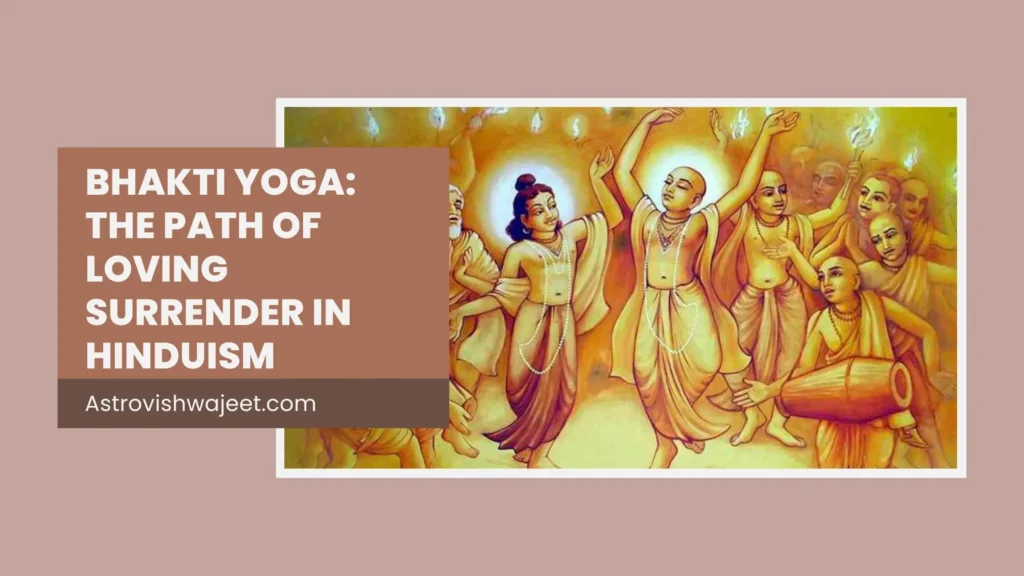
Bhakti Yoga: The Path of Loving Surrender in Hinduism

Among the many spiritual traditions of Hinduism, Bhakti Yoga stands out as one of the most accessible, heartfelt, and transformative paths to spiritual realization. Rooted in love, devotion, and complete surrender to the Divine, Bhakti Yoga teaches that the highest goal of human life can be attained through an intimate relationship with God.
The Sanskrit word Bhakti derives from the root bhaj, meaning “to share,” “to adore,” or “to worship.” Bhakti Yoga, therefore, is the yoga of devotion, where the practitioner cultivates unconditional love for the Divine through prayer, chanting, worship, remembrance, and selfless service.
Unlike paths that emphasize intellectual inquiry or rigorous meditation, Bhakti Yoga appeals directly to the heart. It teaches that sincere devotion can dissolve the ego, purify the mind, and ultimately lead the soul toward union with the Divine. Throughout centuries, saints, sages, poets, and devotees have embraced this path, making it one of the most influential spiritual movements in Hinduism.
The Meaning and Essence of Bhakti Yoga
Bhakti Yoga is fundamentally the practice of directing one’s emotions, thoughts, and actions toward God. It is not merely a ritualistic form of worship but a profound spiritual discipline that transforms ordinary human love into divine love.
According to Bhakti philosophy, every soul possesses an innate longing for the Divine. The dissatisfaction and suffering experienced in worldly life arise because this longing is often directed toward temporary objects and relationships. Bhakti Yoga redirects this yearning toward the eternal source of all existence.
In the devotional tradition, God is not viewed as a distant or abstract force but as a loving, compassionate presence who responds to the sincere devotion of the devotee. The relationship between the devotee and God can take many forms, including:
- Servant and Master
- Friend and Companion
- Parent and Child
- Lover and Beloved
- Soul and Supreme Being
These relationships help devotees cultivate a personal and emotional connection with the Divine, making spiritual practice deeply meaningful and fulfilling.
Historical Development of Bhakti Yoga
The roots of Bhakti Yoga can be traced back to the ancient Vedic period, where hymns and prayers expressed reverence toward various deities. However, the Bhakti movement gained significant prominence during the later stages of Hindu history.
The Upanishads introduced philosophical ideas about the nature of the self and ultimate reality, while texts such as the Bhagavad Gita integrated devotion into a complete spiritual path.
Between the 6th and 17th centuries, the Bhakti Movement flourished across India. Saints and poets emphasized personal devotion over ritualism, social status, or scholarly achievement. They taught that divine grace is available to everyone regardless of caste, gender, wealth, or education.
Prominent Bhakti saints include:
- Mirabai
- Tulsidas
- Surdas
- Chaitanya Mahaprabhu
- Namdev
- Tukaram
- Andal
- Ramanujacharya
- Basava
- Narsinh Mehta
Their devotional songs, poems, and teachings continue to inspire millions of devotees today.
Bhakti Yoga in the Bhagavad Gita
The Bhagavad Gita is one of the most authoritative texts on Bhakti Yoga. In this sacred dialogue between Lord Krishna and Arjuna, Krishna explains various paths to spiritual realization, including Karma Yoga, Jnana Yoga, and Bhakti Yoga.
Krishna repeatedly emphasizes that loving devotion is among the most direct and effective means of attaining union with God.
One of the most famous teachings states that even the simplest offering becomes sacred when offered with love and devotion. The emphasis is not on the material value of the offering but on the sincerity of the devotee’s heart.
According to the Gita, a true devotee possesses qualities such as:
- Compassion
- Humility
- Forgiveness
- Non-violence
- Self-control
- Faith
- Equanimity
These virtues naturally develop as devotion deepens.
The Gita also teaches the principle of surrender (Sharanagati), where the devotee places complete trust in God’s guidance and protection. This surrender is not passive resignation but an active expression of faith and love.
The Philosophy of Loving Surrender
At the heart of Bhakti Yoga lies the concept of loving surrender. This surrender involves relinquishing the ego’s illusion of independence and recognizing one’s dependence upon the Divine.
In everyday life, people often identify themselves with their achievements, possessions, social roles, and personal desires. Bhakti Yoga teaches that these identifications create attachment and suffering.
Through devotion, the practitioner gradually learns to:
- Offer actions to God
- Accept life’s outcomes with faith
- Let go of selfish desires
- Cultivate gratitude
- Trust divine wisdom
Loving surrender does not mean abandoning responsibility. Instead, it means performing one’s duties while maintaining inner devotion and freedom from excessive attachment to results.
This attitude transforms ordinary life into a spiritual practice.
Nine Forms of Bhakti
Traditional Hindu scriptures describe nine primary expressions of devotion, known as Navadha Bhakti.
1. Shravana (Listening)
Listening to stories, teachings, and scriptures related to God. Hearing sacred narratives helps cultivate faith and devotion.
2. Kirtana (Chanting)
Singing divine names and glories. Kirtan is one of the most popular forms of Bhakti practice and is known for uplifting the heart and mind.
3. Smarana (Remembrance)
Constant remembrance of God through meditation, contemplation, and mindfulness.
4. Pada-Sevana (Service)
Serving the Divine through acts of worship and service.
5. Archana (Worship)
Performing ritual worship using flowers, incense, lamps, and prayers.
6. Vandana (Prayer)
Offering heartfelt prayers and expressions of gratitude.
7. Dasya (Servitude)
Viewing oneself as a servant of God and performing actions with humility.
8. Sakhya (Friendship)
Developing an intimate friendship with the Divine.
9. Atma-Nivedana (Complete Surrender)
Offering one’s entire being to God in total devotion and trust.
These forms provide diverse ways for individuals to express their devotion according to their temperament and spiritual inclination.
The Role of Divine Names and Mantras
One of the most powerful practices in Bhakti Yoga is the repetition of divine names and sacred mantras.
Devotees believe that the name of God carries divine power and presence. Repeating sacred names purifies the mind, calms emotional disturbances, and deepens spiritual awareness.
Popular devotional mantras include:
- Om Namah Shivaya
- Hare Krishna Hare Rama
- Om Namo Bhagavate Vasudevaya
- Jai Shri Ram
- Om Namo Narayanaya
Mantra repetition, known as Japa, can be practiced silently, aloud, or through singing. Many devotees use prayer beads to maintain concentration and regularity.
The continual remembrance of divine names helps keep the mind connected to God throughout daily activities.
Bhakti Yoga and Emotional Transformation
Human emotions often fluctuate between joy, sorrow, attachment, fear, and desire. Bhakti Yoga does not suppress emotions; instead, it transforms them into vehicles for spiritual growth.
Love, longing, gratitude, and devotion become means of connecting with the Divine.
The devotional saints often expressed intense emotions in their poetry and songs. Their writings reveal a deep yearning for union with God and demonstrate how spiritual love can transcend ordinary emotional experiences.
Through Bhakti practice, negative emotions gradually lose their power as the heart becomes filled with divine remembrance and compassion.
This emotional purification contributes significantly to inner peace and spiritual maturity.
The Importance of a Guru
Many Bhakti traditions emphasize the guidance of a Guru or spiritual teacher.
A Guru serves as a guide who helps the seeker navigate the spiritual journey. Through teachings, example, and blessings, the Guru inspires devotion and helps remove obstacles on the path.
The Guru is often regarded as a representative of divine wisdom rather than merely a human instructor.
However, Bhakti traditions also stress that genuine devotion to God remains the ultimate goal. The Guru’s role is to help the devotee deepen that relationship.
Bhakti Yoga in Daily Life
One of the greatest strengths of Bhakti Yoga is its practicality. Unlike practices that require isolation or extensive philosophical study, Bhakti can be integrated into everyday life.
Simple daily practices include:
- Morning prayers
- Chanting mantras
- Reading sacred texts
- Visiting temples
- Participating in devotional singing
- Practicing gratitude
- Offering food before meals
- Serving others selflessly
Even routine tasks can become acts of devotion when performed with the intention of serving God.
This approach allows spiritual growth to occur amidst family responsibilities, work commitments, and social interactions.
Bhakti Yoga and Other Paths of Yoga
Hindu philosophy recognizes multiple paths leading toward spiritual realization.
Karma Yoga
The path of selfless action. Practitioners perform duties without attachment to results.
Jnana Yoga
The path of knowledge and self-inquiry. It focuses on understanding the true nature of reality.
Raja Yoga
The path of meditation and mental discipline. It emphasizes concentration and inner control.
Bhakti Yoga
The path of love and devotion. It centers on cultivating a personal relationship with the Divine.
While these paths have distinct methods, they are not mutually exclusive. Many spiritual seekers combine aspects of all four approaches.
The Bhagavad Gita itself presents an integrated vision in which action, knowledge, meditation, and devotion complement one another.
Modern Relevance of Bhakti Yoga
In today’s fast-paced world, many people experience stress, anxiety, loneliness, and emotional fragmentation. Bhakti Yoga offers a powerful antidote by reconnecting individuals with deeper meaning, purpose, and spiritual fulfillment.
The path encourages:
- Emotional healing
- Inner peace
- Compassion
- Community connection
- Spiritual resilience
- Gratitude
- Faith
Modern devotional communities continue to flourish worldwide through temples, spiritual organizations, online gatherings, and kirtan events.
The universal message of divine love transcends cultural and geographical boundaries, attracting seekers from diverse backgrounds.
As people search for authentic spiritual experiences, Bhakti Yoga remains a timeless path capable of transforming both individual lives and communities.
Conclusion
Bhakti Yoga is far more than a religious practice; it is a profound journey of the heart. Through love, devotion, remembrance, and surrender, the practitioner gradually transcends ego-centered existence and discovers a living relationship with the Divine.
The teachings of Bhakti affirm that spiritual realization is not reserved for scholars, ascetics, or philosophers alone. Every individual, regardless of background or circumstance, can walk the path of devotion. A sincere heart, a loving spirit, and unwavering faith are the essential qualifications.
By embracing the principles of Bhakti Yoga, seekers learn to transform ordinary life into an offering of love. In this sacred process, devotion becomes wisdom, surrender becomes strength, and the soul finds its ultimate fulfillment in union with the Divine.
The enduring legacy of Bhakti Yoga continues to inspire millions across the world, reminding humanity that love remains one of the most powerful and direct pathways to spiritual awakening.