
How to Begin a Japa Mala Practice: A Step-by-Step Guide

In the vast world of Vedic and yogic traditions, few practices are as accessible, powerful, and transformative as Japa Mala meditation. Rooted deeply in the ancient scriptures of Hinduism, Buddhism, and Jainism, Japa—repetition of a sacred mantra using a Mala (rosary)—offers a bridge between the outer world and your innermost self. Whether you’re new to spirituality or seeking to deepen your daily sadhana, this guide will walk you through how to begin and maintain a meaningful Japa Mala practice.
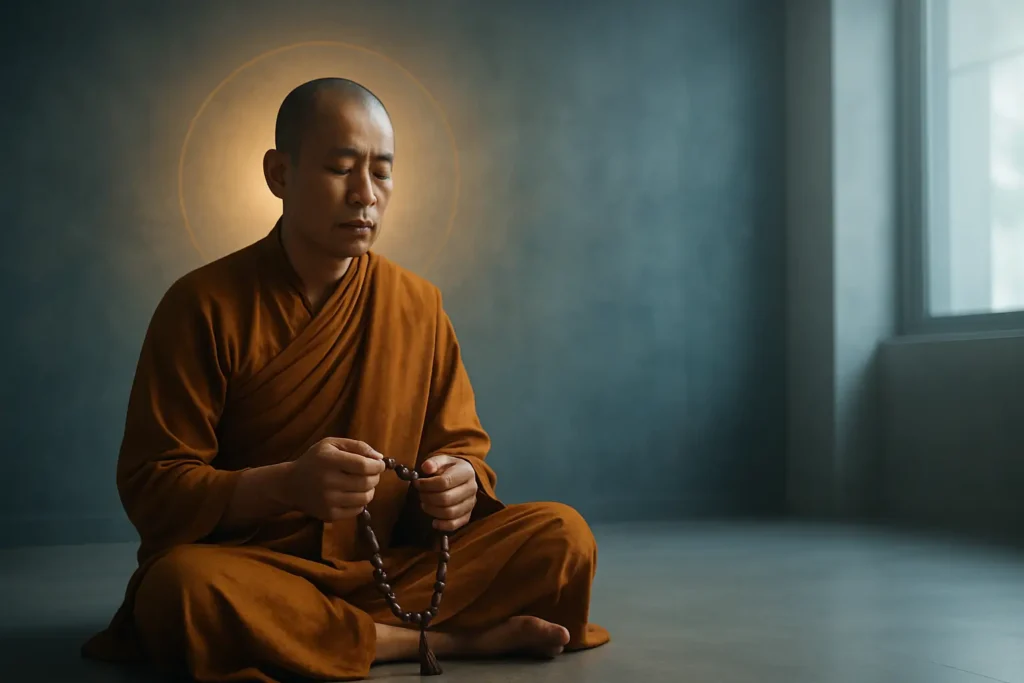
What is Japa Mala?
Understanding the Components
- Japa means “muttering” or “repetition” of a mantra.
- Mala means “garland.” A Japa Mala is a string of 108 beads, traditionally used to count each recitation of a mantra.
Japa Mala meditation is not just a mechanical chanting process; it is a devotional and mindful spiritual discipline. Each bead touched with reverence brings the practitioner closer to mental clarity, emotional peace, and spiritual awakening.
Why Practice Japa Mala?
Spiritual Benefits
- Aligns your mind with higher vibrations.
- Connects you with your chosen deity (Ishta Devata).
- Purifies karmic impressions.
Mental & Emotional Benefits
- Calms the nervous system.
- Reduces anxiety and stress.
- Builds concentration and inner resilience.
Physical Benefits
- Regulates breath and heart rate.
- Encourages mindfulness and presence.
- Supports sound sleep and a healthier mind-body balance.
In Vedic philosophy, Naam Japa (mantra repetition) is considered the most effective sadhana in Kaliyuga, as highlighted by saints like Tulsidas and Chaitanya Mahaprabhu.
Step-by-Step Guide to Start Japa Mala Practice
Step 1: Choosing Your Mala
A Japa Mala typically contains 108 beads plus one Guru bead. Materials may include:
- Rudraksha (associated with Lord Shiva)
- Tulsi wood (sacred to Lord Krishna)
- Sandalwood (cooling and calming)
- Crystal/Quartz (amplifies mantra energy)
Tip: Choose a Mala that resonates with your deity or energy type.
Step 2: Selecting Your Mantra
The mantra is the spiritual core of your Japa practice. It can be:
Vedic Mantras
- “Om Namah Shivaya” – Invocation to Lord Shiva
- “Om Namo Bhagavate Vasudevaya” – Salutation to Lord Vishnu/Krishna
- “Om Aim Hreem Kleem Chamundaye Viche” – Mantra of Goddess Durga
Beej Mantras
- “Om” – Universal sound
- “Hreem” – Shakti (creative energy)
- “Shreem” – Abundance and Lakshmi
Guru-given Mantras
Ideally, a mantra given by a Guru or spiritual teacher carries special Siddhi (power).
Note: Avoid switching mantras frequently. Let one mantra settle into your consciousness.
Step 3: Finding the Right Time and Space
The best time for Japa is Brahma Muhurta (around 4–6 AM), when the mind is calm and the environment is spiritually charged.
Create a Sacred Space
- Choose a clean, quiet corner.
- Set up a small altar with deity idols, incense, and a diya (lamp).
- Sit on a natural mat like wool, kusa grass, or cotton.
Consistency builds sanctity. Perform Japa at the same time and place daily.
Step 4: Sitting in the Right Posture
- Sit cross-legged (Padmasana or Sukhasana) with the spine upright.
- Close your eyes gently.
- Rest your left hand on your knee and hold the Mala in the right hand.
Hand Position and Bead Use
- Use the right hand, with the Mala draped over the middle finger.
- Use the thumb to roll each bead toward you. Avoid the index finger, symbolically considered the ego.
- Do not cross the Guru bead. When you reach it, reverse direction.
Step 5: Begin the Japa Practice
- Set an Intention (Sankalpa): Mentally offer your Japa to the Divine for spiritual progress, healing, or inner peace.
- Start at the Guru Bead, recite the mantra silently or softly.
- With each repetition, move to the next bead.
- Maintain mental focus, even if the mind wanders. Gently bring it back.
- Complete the 108 rounds.
You can repeat this for 1, 3, 5, or 11 malas based on your time and discipline.
Step 6: Closing the Practice
After completing your rounds:
- Sit silently for 2–5 minutes.
- Offer gratitude to your deity and Guru.
- Mentally dedicate the fruits of the Japa to the welfare of all beings (Lok Kalyan).
Store your Mala respectfully in a pouch or place it near your altar.
Tips to Deepen Your Japa Mala Practice
1. Be Regular and Consistent
Spiritual progress comes through Abhyasa (regularity) and Vairagya (detachment). Start with one round daily and increase gradually.
2. Observe Mouna (Silence)
Chant silently or in a low whisper. This inward focus helps settle the mind.
3. Use a Japa Bag (Gomukhi)
Traditionally, the Mala is kept inside a Japa bag to maintain the sanctity and privacy of the practice.
4. Count with Awareness
Avoid mechanical chanting. Let each mantra resonate fully. Feel the energy rising within.
5. Mantra Purification
Chant the mantra clearly and correctly. Learn pronunciation from authentic sources or gurus to preserve the Shakti of the mantra.
Common Challenges and How to Overcome Them
1. Mind Wandering
Solution: Gently bring your attention back. Don’t fight thoughts. Watch them like clouds.
2. Laziness or Resistance
Solution: Remind yourself of the benefits. Keep a spiritual diary. Track how you feel after each session.
3. Inconsistency
Solution: Set reminders. Pair Japa with a daily routine like waking up or before meals.
4. Expecting Immediate Results
Solution: Practice Shraddha (faith) and Saburi (patience). Results come gradually.
Sacred Vedic References to Japa Practice
- Bhagavad Gita (10.25): “Yajñānāṁ japa-yajño’smi” – Among all yajnas (sacrifices), I am the sacrifice of Japa.
- Narada Bhakti Sutras: Repeats the importance of Naam Smaran as a path to Bhakti Yoga.
- Vishnu Purana: Emphasizes Japa as more potent than physical yajnas in Kali Yuga.
Integrating Japa in Daily Life
You don’t need to be a renunciate to practice Japa. Here’s how to bring it into your routine:
- During travel or waiting periods
- Morning or evening routine
- Before or after yoga or pranayama
- Before sleeping to calm the mind
Even silent mental repetition without the Mala has deep benefits.
Advanced Practices
Once you’re comfortable with daily Japa, consider:
- Mantra Purashcharana: Intensive repetition of a mantra in a fixed number for Siddhi.
- Likhit Japa: Writing the mantra in a notebook—a meditative process.
- Akhanda Japa: Continuous repetition for hours, especially during festivals or spiritual retreats.
Frequently Asked Questions
Q1. Can I wear my Japa Mala?
Yes, but with purity and reverence. Rudraksha and Tulsi Malas are worn around the neck, but avoid wearing during impure activities (bathroom, meat consumption, etc.).
Q2. Should I chant aloud or silently?
Start by chanting aloud, then transition to whispering and eventually to Manasika Japa (mental repetition), which is most potent.
Q3. Can I do Japa during menstruation?
In traditional views, it’s avoided. However, Mansik jaap and devotional chanting without Mala is considered acceptable by many modern practitioners.
Q4. Is initiation necessary?
Not mandatory, but if a Guru gives a mantra, it carries extra potency due to Shaktipat (energy transmission).
Conclusion
Starting a Japa Mala practice is like planting a spiritual seed in your soul. With daily watering—through repetition, devotion, and discipline—it grows into a tree of peace, strength, and realization. You don’t need to be perfect; you just need to begin. The power of the mantra, the sacred beads, and your sincere intent will guide your journey.
Let your Japa be not just a practice, but a daily meeting with the Divine.
Suggested Resources
- Books: “Japa Yoga” by Swami Sivananda, “Mantra Yoga and Primal Sound” by David Frawley
- Mantra Audio: Bhajan recordings, Guru-led chanting
- Apps: Mantra counter apps, meditation timers
Final Words
As the Bhagavad Gita reminds us, “In the path of devotion, no effort is ever wasted.” Your Japa practice may start small, but its effects ripple across lifetimes. Begin today—with one bead, one breath, one mantra.
Om Tat Sat.