What Is Vastu and Why Is It Still Relevant Today?

Vastu Shastra, often referred to simply as “Vastu,” is an ancient Indian architectural science rooted in Vedic traditions. It lays down principles for designing and constructing buildings that promote harmony, prosperity, and well-being by aligning with natural energies. Though thousands of years old, Vastu continues to influence modern architecture and interior design in India and around the world. But what exactly is Vastu Shastra, and why is it still considered relevant today?
Origins and Meaning of Vastu
The word Vastu comes from the Sanskrit root vas, meaning “to dwell or reside.” Shastra means “science” or “treatise.” Thus, Vastu Shastra translates to “the science of dwelling.” Rooted in the Vedas, particularly the Atharva Veda, Vastu is a holistic discipline that encompasses architecture, engineering, philosophy, astrology, and spirituality.
Vastu Shastra was codified by ancient sages such as Vishwakarma and Mayan. Their texts laid out detailed principles for constructing various kinds of spaces—homes, temples, palaces, and even entire cities—based on directional alignments, elemental balance, and geometric proportions.
Fundamental Principles of Vastu
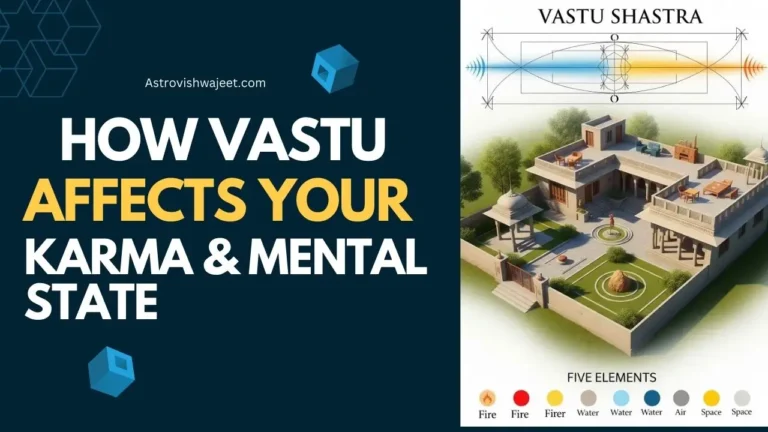
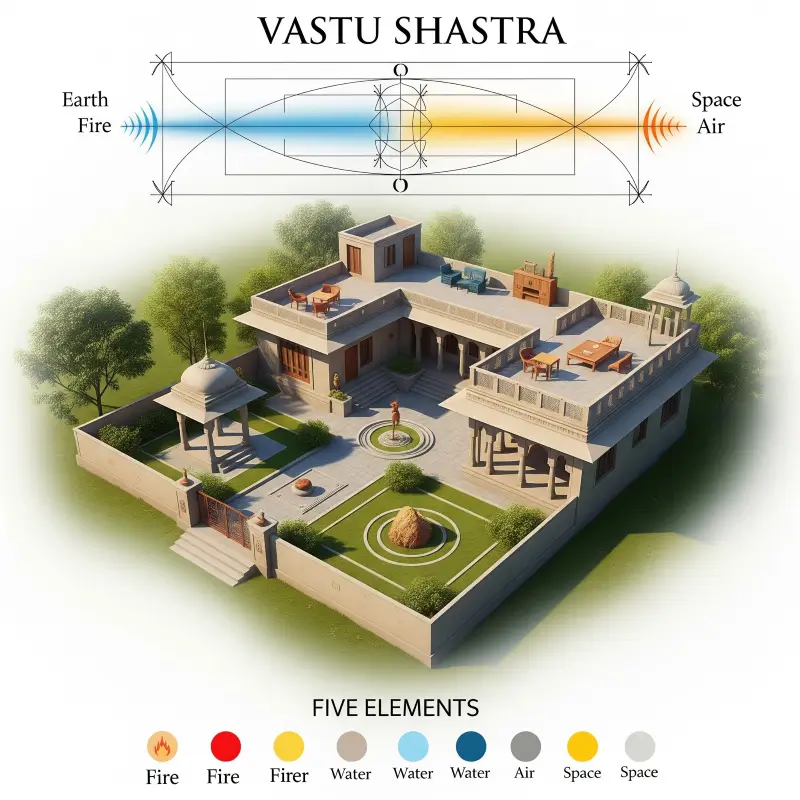
At its core, Vastu seeks to harmonize human dwellings with the five elements (Pancha Mahabhutas)—earth (prithvi), water (jala), fire (agni), air (vayu), and space (akasha). These elements are believed to be present in all matter and must be balanced within a structure to ensure health and happiness.
Here are some of the key principles of Vastu Shastra:
1. Direction and Orientation
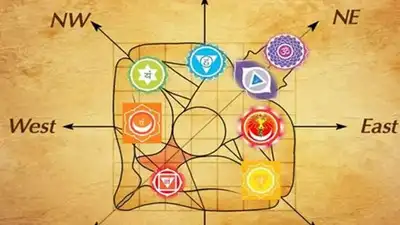
Vastu assigns great significance to the cardinal directions (north, south, east, west) and the intermediate ones (northeast, northwest, southeast, southwest). Each direction is ruled by a particular deity and element:
- North – ruled by Kubera (god of wealth), associated with prosperity.
- East – ruled by Indra (king of gods), linked to growth and spirituality.
- South – ruled by Yama (god of death), needs careful management.
- West – ruled by Varuna (god of water), associated with gains.
Buildings are ideally aligned with magnetic north, allowing optimal exposure to sunlight and natural ventilation.
2. Room Placement and Zoning
Each room in a house is recommended to be placed in a specific direction to optimize the benefits of natural energies:
- Kitchen – Southeast (agni corner), to harness the fire element.
- Master bedroom – Southwest, for stability and strength.
- Puja room – Northeast, the most spiritually charged zone.
- Living room – North or east, to allow natural light and energy.
3. The Vastu Purusha Mandala
This is a sacred energy grid that divides a plot into a set of squares, each governed by a specific deity. The Vastu Purusha, the presiding spirit of the land, is imagined as lying with his head in the northeast and feet in the southwest. Structures should be designed to respect this orientation and support the flow of positive energies.
4. Energy Flow and Open Spaces
Vastu emphasizes free and unblocked energy flow (prana). Open courtyards, proper ventilation, and uncluttered entryways ensure that life-enhancing energies circulate freely within a space.
5. Use of Natural Materials
Traditional Vastu encourages using materials like wood, stone, mud, and lime, which are believed to resonate better with natural vibrations and create healthier indoor environments.
Scientific Basis of Vastu
While Vastu is deeply spiritual, many of its guidelines also have logical, practical, and scientific foundations.
- Sunlight and Ventilation: Orienting homes toward the east allows for maximum sunlight exposure in the morning, which is known to boost vitamin D levels and mental well-being.
- Thermal Management: Placing kitchens in the southeast, away from bedrooms in the southwest, helps manage heat and prevents discomfort during summer.
- Magnetic Alignment: Aligning buildings with the Earth’s magnetic field is believed to reduce stress and support better sleep cycles.
- Zoning and Functionality: Logical room placement based on activities leads to better space utilization and comfort.
Vastu can be seen as an ancient form of bioclimatic design—an approach that uses natural conditions to maintain thermal comfort indoors.
Why Vastu Still Matters Today
1. Cultural Relevance
In India and among the global Indian diaspora, Vastu remains deeply ingrained in cultural consciousness. It is common to consult a Vastu expert before purchasing land, designing a home, or initiating a business. Even modern apartment complexes and skyscrapers are marketed with “Vastu compliance” as a selling point.
This is not merely a matter of superstition; for many, Vastu represents a way of aligning one’s lifestyle with tradition and nature.
2. Holistic Living
Vastu promotes the idea of living in harmony with the cosmos. In an era where urban life often feels disconnected from nature, Vastu offers a framework to reestablish this connection. By emphasizing light, air, spatial arrangement, and elemental balance, it contributes to psychological well-being and mindfulness.
3. Psychological Comfort
Even a basic adherence to Vastu principles can provide a sense of peace and security. For those who believe in it, living in a Vastu-compliant home brings a mental assurance that can improve overall happiness. The placebo effect, in this case, contributes positively to mental health.
4. Sustainable Architecture
Modern green architecture increasingly echoes Vastu ideals: energy efficiency, passive solar design, cross-ventilation, and the use of sustainable materials. Architects today are finding synergy between Vastu principles and ecological design goals.
5. Urban Challenges and Vastu Solutions
Today’s urban spaces are plagued with noise, pollution, and overcrowding. Vastu helps mitigate these by advocating:
- Strategic room placements to reduce noise intrusion.
- Use of internal courtyards for light and ventilation.
- Orientation that reduces heat absorption and cooling costs.
In fact, Vastu-compliant buildings often have better spatial layouts and comfort, enhancing real estate value.
Modern Adaptations of Vastu
While traditional Vastu was designed for large, standalone homes, today’s realities—small apartments, high-rises, and commercial spaces—require flexibility. Modern Vastu consultants adapt ancient principles to fit contemporary lifestyles.
For example:
- If a southeast kitchen isn’t feasible, using colors or symbolic remedies like copper sun motifs can partially substitute directional compliance.
- In flats where orientation is fixed, internal room arrangements, mirrors, lighting, and materials can be optimized to align better with Vastu energies.
Technology also plays a role: software tools now exist to evaluate Vastu compatibility, and 3D models help clients visualize spatial energy flows.
Common Vastu Corrections Without Reconstruction
One of the reasons Vastu remains accessible is that many of its corrections can be made without structural changes. Here are a few common examples:
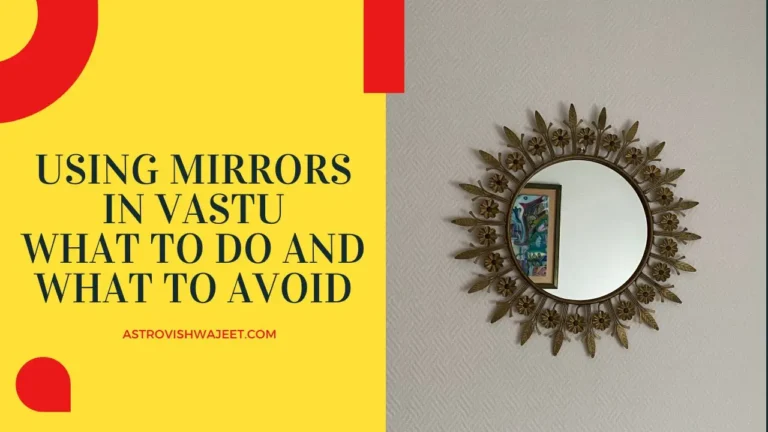
- Mirrors: Used to redirect energy flow, especially in spaces lacking proper orientation.
- Colors: Each direction is associated with specific colors; using these in décor can enhance energies.
- Plants and Water Features: Indoor plants in the east or north improve vitality; water fountains in the northeast attract positivity.
- Lighting: Proper illumination in dark corners disperses stagnant energy.
These non-invasive measures make Vastu practical even for renters or people living in shared housing.
Vastu and Mental Health
There’s growing awareness of how our environment affects mental health. A cluttered, dark, or poorly arranged space can lead to stress, anxiety, or fatigue. Vastu’s emphasis on:
- open layouts,
- natural light,
- calm colors, and
- directional energy
can contribute to psychological well-being. It essentially promotes environmental mindfulness, encouraging individuals to be aware of how their surroundings impact them.
Vastu vs. Feng Shui: A Comparison
Vastu Shastra and the Chinese tradition of Feng Shui share similar goals—creating harmony between humans and their environment. Both are based on directional alignments, elemental balance, and energy flow.
However, key differences include:
- Origins: Vastu is Vedic; Feng Shui is Taoist.
- Elements: Vastu uses five elements; Feng Shui uses five different ones (wood, fire, earth, metal, water).
- Rigidity: Vastu tends to be more structural and prescriptive; Feng Shui is more fluid and symbolic.
Many modern practitioners blend the two systems, especially in multicultural societies.
Criticisms and Misconceptions
Like many ancient systems, Vastu is not without its criticisms:
- Superstition: Some dismiss it as unscientific or fear-based.
- Commercial Exploitation: Unscrupulous consultants sometimes exploit people’s fears for profit.
- Rigidity: Traditional Vastu can seem inflexible, especially in modern urban settings.
However, these concerns often stem from a lack of understanding. When approached as a design philosophy rather than a set of rigid rules, Vastu becomes a valuable tool for enhancing spatial well-being.
The Future of Vastu
With the rise of AI in architecture, augmented reality in home design, and smart homes, you might wonder if Vastu still has a place. The answer is a resounding yes.
In fact, the integration of Vastu with modern design software, environmental data, and wellness metrics is already happening. Vastu can guide not just physical layouts but also digital interfaces—for instance, using directional awareness in virtual reality environments.
As humanity becomes more conscious of sustainable living and mental well-being, the ancient wisdom of Vastu offers timeless insights that are more relevant than ever.
Conclusion
Vastu Shastra is much more than an ancient relic of Indian tradition; it is a sophisticated, holistic system of environmental design. While deeply spiritual, it is also remarkably practical. Its principles align closely with modern ideas of wellness architecture, sustainable living, and psychological design.
Whether you’re building a new home, renovating an office, or simply rearranging a room, Vastu offers tools to enhance harmony, health, and happiness. In a world full of noise and imbalance, Vastu’s enduring relevance lies in its ability to reconnect us—with nature, with energy, and ultimately, with ourselves.