Vastu and Astrology: How Your Birth Chart Influences Ideal Space Design

In the ancient wisdom traditions of India, both Vastu Shastra and Jyotish Shastra (Vedic Astrology) hold revered places. Each provides profound insights into how cosmic energies affect life on Earth. While Vastu Shastra is the science of architecture and spatial arrangement, astrology decodes the karmic and psychological patterns etched in an individual’s birth chart. When these two disciplines are integrated, they can provide a uniquely personalized blueprint for designing spaces that harmonize with one’s astrological constitution, thereby enhancing well-being, prosperity, and spiritual growth.
This article explores the dynamic interplay between Vastu and astrology, and how your birth chart—or Janma Kundali—can be used to tailor your living and working spaces to align with your planetary energies.
Understanding Vastu Shastra
Vastu Shastra is the ancient Indian system of architecture, derived from the Sanskrit words “Vastu” (dwelling) and “Shastra” (science or doctrine). Rooted in the Vedas, it prescribes principles for designing homes, temples, and even cities to create harmony between human dwellings and the natural forces.
At its core, Vastu revolves around:
- The Panchamahabhutas (Five Elements): Earth (Prithvi), Water (Apas), Fire (Agni), Air (Vayu), and Space (Akasha)
- The Cardinal Directions (North, South, East, West, and their intermediates)
- The Energy Grid: The interaction of cosmic energy (Brahmasthan) with spatial organization
The goal of Vastu is to ensure a continuous, balanced flow of energy (Prana) within the built environment, promoting physical health, mental clarity, and spiritual peace.

Understanding Vedic Astrology
Jyotish Shastra, or Vedic Astrology, is the science of light. It interprets the positioning of celestial bodies at the time of birth to reveal one’s karmic blueprint, psychological tendencies, strengths, weaknesses, and life path.
A birth chart (natal chart or horoscope) is divided into 12 houses, each representing specific areas of life. Planets residing in or ruling these houses, their aspects (drishti), conjunctions, and the operating dashas (planetary periods) all contribute to a comprehensive picture of the native’s life.
The birth chart is not just a map of fate—it’s a guide to living in harmony with one’s dharma (life purpose).
The Fusion of Vastu and Astrology
When Vastu and astrology intersect, the result is Astro-Vastu—a deeply personalized spatial science. While general Vastu rules apply universally, Astro-Vastu fine-tunes these guidelines based on the individual’s astrological makeup. In other words, your birth chart determines which Vastu principles are most beneficial or need adjustment for you.
This approach becomes especially helpful in situations where standard Vastu remedies fail to produce results. It answers the subtle, often overlooked question: “Is this space compatible with my energetic constitution?”
Key Elements Linking Astrology and Vastu
Let’s explore how specific astrological factors inform Vastu-based design:
1. The Ascendant (Lagna) and Lagna Lord
Your Ascendant (the sign rising on the eastern horizon at birth) governs your body, personality, and environment. The Lagna Lord (planet ruling the Ascendant sign) becomes especially important in Vastu.
- Fire Ascendants (Aries, Leo, Sagittarius): Benefit from Agni-related placements—like a southeast kitchen, vibrant colors, and ample sunlight.
- Water Ascendants (Cancer, Scorpio, Pisces): Need soothing environments with north/northeast emphasis and water features.
- Earth Ascendants (Taurus, Virgo, Capricorn): Prefer grounded, stable designs with west and southwest orientations.
- Air Ascendants (Gemini, Libra, Aquarius): Do well with open, airy spaces and emphasis on the east and northwest.
2. Moon Sign and Emotional Needs
The Moon sign reveals emotional tendencies and comfort zones. A person with Moon in Taurus, for example, may prefer cozy, luxurious surroundings, while Moon in Aquarius may favor minimalist, unconventional interiors.
The placement of the Moon can indicate ideal sleeping directions, the importance of certain rooms (like a northeast meditation room), or even the need for natural elements like plants or water bodies.
3. Favorable and Malefic Planets
Planets are classified in Vedic astrology as benefic (like Jupiter and Venus) and malefic (like Saturn, Mars, Rahu, and Ketu). The placement of these planets can indicate where energy correction is needed.
For instance:
- A strong Mars: Indicates that southeast (Agni corner) should be energized. A weak or afflicted Mars can mean avoiding too much fire or red tones.
- A weak Jupiter: Calls for energizing the northeast (Ishanya), perhaps by creating a sacred space or prayer room there.
- Rahu/Ketu afflictions: Can manifest as psychic or energetic disturbances; require space clearing and symbolic corrections.
4. Nakshatras and Personality Traits
Each planet resides in a Nakshatra (lunar mansion), which adds nuance to its expression. For example, a Sun in Krittika Nakshatra may do well with fire symbolism, copper décor, or a southeast study room.
The Nakshatra Lord’s influence can also help decide materials, colors, or placement of symbolic items like crystals, mirrors, or yantras.
5. Mahadasha and Antardasha Periods
The planetary periods one is going through also determine which areas of the home should be enhanced or protected. If someone is under Shani Mahadasha, emphasis on the west and southwest is vital, perhaps with earthy tones, solid furniture, and a sense of security.
Similarly, Rahu Dasha may require protecting the northwest or incorporating air elements and reflective surfaces to stabilize erratic energies.
Applying Astro-Vastu in Home Design
Here’s a simplified guide to how one can design or adjust various parts of the home based on astrological guidance:
1. Entrance/Main Door
- Match the direction of the main door to a favorable planet based on Lagna.
- East-facing doors are generally auspicious but especially beneficial for Leo or Aries Lagna.
- North-facing entrances favor Mercury-ruled Ascendants (Gemini, Virgo).
2. Master Bedroom
- The ideal location depends on the dominant element in your chart.
- Southwest is best for those needing grounding (Capricorn, Taurus Lagna).
- East or northeast suits air and water signs needing inspiration and emotional comfort.
3. Kitchen
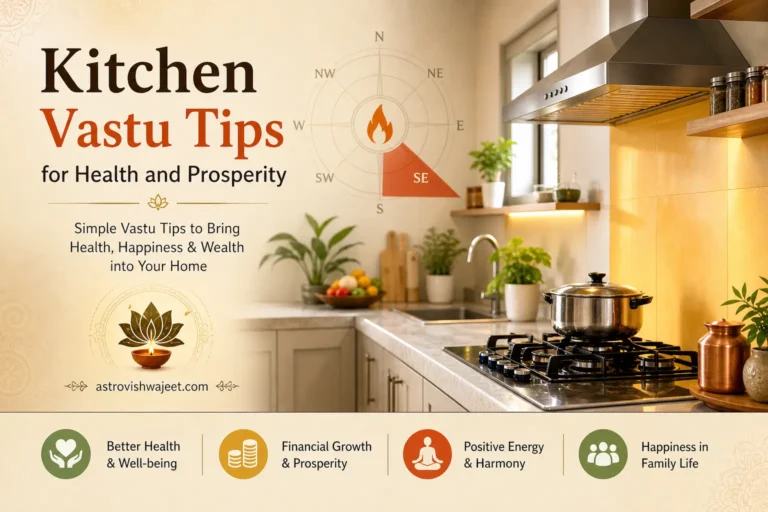
- Typically placed in the southeast, the Agni corner.
- For weak Mars or Sun, ensure moderation in heat-generating appliances and use calming colors like green.
- For strong, fiery charts, balance the kitchen with water and earth elements.
4. Prayer Room / Meditation Space
- Ideally placed in the northeast (Ishanya).
- Jupiter-ruled signs (Sagittarius, Pisces) benefit greatly from energizing this area.
- Use yellow, gold, or white tones to harmonize with the Guru’s energy.
5. Study Room / Home Office
- East or north is ideal.
- Mercury-ruled signs (Gemini, Virgo) thrive here with shades of green and plants.
- For Saturn periods, consider a southwest study area with darker tones and heavy desks.
Case Study: A Personalized Vastu Example
Let’s take an example of a person with:
- Ascendant: Cancer
- Moon: Taurus in 11th House
- Mars: Debilitated in Cancer (1st House)
- Jupiter: Strong in 9th House (Pisces)
Astro-Vastu Recommendations:
- Main Door: North-facing to align with the Moon’s comfort and emotional security.
- Kitchen: Avoid southeast due to Mars’ debilitation in the chart. Prefer northwest kitchen with cooling elements and water presence.
- Bedroom: Southwest bedroom with earthy, comforting decor suits Moon in Taurus.
- Puja Room: Northeast corner emphasized, with light yellow and white colors to enhance Jupiter.
- Living Room: East-facing, open and airy for social harmony and community (11th House Moon).
Common Vastu Remedies Based on Astrology
Even if one cannot redesign their space entirely, certain remedies can be implemented to balance energy:
- Yantras: Geometric tools like Vastu Purusha Mandala, Navagraha Yantras, or specific planetary yantras placed in strategic directions.
- Crystals and Stones: Use crystals aligned to planetary energies—e.g., yellow sapphire for Jupiter in northeast.
- Colors: Modify room colors to match beneficial planetary energies.
- Metal Remedies: Copper for Sun, Iron for Saturn, Silver for Moon—used in architecture or décor.
- Symbolic Items: Mirrors, fountains, lamps, or bells can uplift stagnant zones.
- Mantras and Sound: Planetary mantras chanted in specific directions can harmonize space.
Benefits of Aligning Vastu with Your Birth Chart
Combining Vastu with astrology can yield tangible and intangible benefits, including:
- Improved mental clarity and emotional stability
- Greater harmony in relationships
- Increased financial and career success
- Better health and vitality
- Enhanced spiritual growth and inner peace
- Reduction of karmic blockages in specific life areas
When the outer space is aligned with your inner cosmic blueprint, life flows with greater ease and synchronicity.
Conclusion
Vastu and astrology are not just ancient superstitions—they are sophisticated sciences of energy alignment. While Vastu lays out the energetic blueprint of space, astrology reveals your unique karmic and energetic imprint. When these two are merged thoughtfully, the result is a deeply personalized, energetically harmonious environment that supports your destiny.
In the modern world, where environmental stress, mental health challenges, and spiritual disconnection are rampant, Astro-Vastu offers a holistic path to realign with nature, the cosmos, and your inner self. Whether you are building a new home, remodeling an office, or simply wanting more peace in your living space, consulting both your Vastu map and your natal chart may be the key to unlocking hidden potential.