Moon in Vedic Astrology: The Mind, Emotions & Inner Self

In Vedic astrology, the Moon holds a place of extraordinary significance. Unlike Western astrology, which emphasizes the Sun, Jyotish Shastra (Vedic astrology) gives paramount importance to the Moon because it represents the mind, which governs our thoughts, emotions, instincts, and overall psychological makeup. It is known as Chandra in Sanskrit and is considered a benefic planet that radiates cool, nurturing, and receptive energy.
This article will explore the Moon in Vedic astrology, its role in the birth chart, its placement in various signs and houses, its aspects and conjunctions, its phases, and its overall importance in predictive astrology and daily life.
1. Symbolism and Mythological Significance
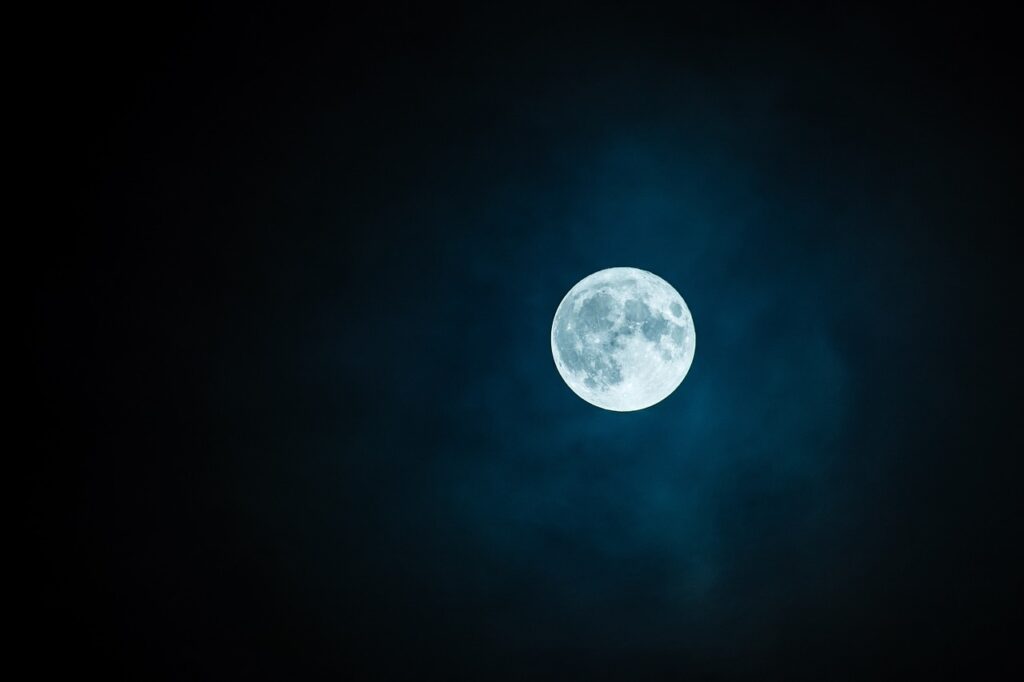
In Hindu mythology, the Moon (Chandra) is depicted as a handsome god, radiant with soothing, silvery light. He is one of the Navagrahas (nine planetary deities) and rides a chariot drawn by ten white horses. According to legend, he is also associated with Soma, the divine nectar of immortality.
Chandra is the son of Sage Atri and Anusuya, and he plays a key role in many mythological tales, including his marriage to the 27 Nakshatras (lunar mansions), who are the daughters of Daksha Prajapati. His favoritism towards Rohini Nakshatra caused friction and led to the famous curse of waning—an allegory for the Moon’s waxing and waning phases.
2. Astronomical and Astrological Relevance
From an astronomical perspective, the Moon is Earth’s closest celestial body, completing a full cycle in about 27.3 days. In astrology, this translates to the Moon transiting one Nakshatra per day, and one zodiac sign every 2.25 days.
Its rapid motion makes the Moon the fastest moving planet, and thus it plays a key role in Muhurta (electional astrology) and daily predictions.
3. Karakatwa (Significations) of the Moon
The Moon is the karaka (significator) of several important aspects of life:
- Mind and Emotions
- Mother and maternal love
- Feminine energy
- Public life and popularity
- Imagination and creativity
- Memory and intuition
- Fluids and water in the body
- Sleep and mental health
4. The Moon in the Birth Chart
In a Vedic birth chart (Janma Kundali), the Moon’s sign, house, Nakshatra, and aspects deeply influence a person’s mental and emotional behavior.
A. Moon as Lagna (Chandra Lagna)
In Vedic astrology, the Moon sign (Rashi) is often used as the ascendant (Lagna) for predictive purposes. It’s believed that the Moon governs one’s day-to-day emotional state, making Chandra Lagna charts extremely useful for analyzing transits, dashas, and compatibility.
5. Moon’s Placement in the 12 Zodiac Signs
The zodiac sign in which the Moon is placed reveals the emotional personality and basic instincts of a person.
Aries (Mesha): Quick emotions, impulsive mind, energetic, but can lack emotional depth.
Taurus (Vrishabha): Exalted position; stable mind, good memory, emotionally secure, love for luxury.
Gemini (Mithuna): Curious, talkative, dual-minded, intellectually inclined.
Cancer (Karka): Own sign; nurturing, intuitive, deeply emotional, attached to home and family.
Leo (Simha): Proud, emotionally expressive, seeks recognition, generous-hearted.
Virgo (Kanya): Analytical mind, critical, perfectionist, emotionally restrained.
Libra (Tula): Balanced emotions, diplomatic, sociable, peace-loving.
Scorpio (Vrishchika): Debilitated here; intense, secretive, emotionally volatile.
Sagittarius (Dhanu): Optimistic, idealistic, philosophical emotions, faith-oriented.
Capricorn (Makara): Reserved, practical, emotionally disciplined, ambitious.
Aquarius (Kumbha): Detached, humanitarian, mentally progressive, eccentric.
Pisces (Meena): Dreamy, imaginative, spiritually inclined, deeply sensitive.
6. Moon’s Placement in the 12 Houses
1st House (Lagna): Emotional personality, sensitive to environment, intuitive.
2nd House: Emotions linked to family and speech, value stability.
3rd House: Mentally adventurous, emotionally tied to siblings, communicative.
4th House: Excellent placement (Sukha Sthana); emotional security, maternal blessings.
5th House: Emotional creativity, romantic, children-oriented.
6th House: Emotional stress from work or health, need for mental discipline.
7th House: Emotional dependence on relationships, romantic, charming.
8th House: Emotional trauma, transformation, interest in occult.
9th House: Emotions linked to philosophy and higher learning.
10th House: Emotions tied to career and status, public recognition.
11th House: Emotional fulfillment through social connections and gains.
12th House: Emotional detachment, dreamy, love for solitude, spiritual inclination.
7. Exaltation, Debilitation, and Friendly Signs
- Exalted in Taurus (up to 3°): The Moon is strongest here—stable emotions, loving, affectionate.
- Debilitated in Scorpio (up to 3°): Vulnerable to emotional extremes, secrecy, and mental turmoil.
- Own Sign: Cancer
- Friendly Signs: Sun, Mercury, Jupiter
- Enemy Signs: None major; Moon is neutral or friendly to most.
8. Moon in Nakshatras
The Moon’s placement in one of the 27 Nakshatras gives deeper insight than just the sign. The Nakshatra where the Moon is located at birth is called the Janma Nakshatra, and it’s critical in determining:
- Mental tendencies
- Dasha period sequence (Vimshottari Dasha)
- Compatibility (Kundali Matching)
- Muhurta (auspicious timing)
Example:
- Ashwini Moon: Fast-thinking, healing mindset.
- Rohini Moon: Charming, artistic, sensual.
- Pushya Moon: Nurturing, generous, religious.
- Anuradha Moon: Loyal, disciplined, mystical.
- Revati Moon: Compassionate, dreamy, musical.
9. Aspects and Conjunctions
The Moon is highly impressionable. It absorbs the qualities of the planets it conjoins or is aspected by.
- With Sun (Amavasya): Ego vs mind conflict, inner tension.
- With Mercury: Intelligent, poetic mind.
- With Jupiter: Wise, balanced emotions, strong intuition.
- With Venus: Romantic, artistic.
- With Saturn: Emotional suppression, melancholic tendencies.
- With Rahu: Obsessive thoughts, anxiety.
- With Ketu: Detachment, spiritual mind, possible emotional confusion.
10. Moon Phases and Their Impact
The Tithi (lunar day) a person is born on influences their mental strength and emotional behavior.
- Shukla Paksha (Waxing Moon): Growing Moon; more extroverted, positive energy, increasing vitality.
- Krishna Paksha (Waning Moon): Introspective, intuitive, more withdrawn.
- Purnima (Full Moon): Strong emotional capacity, creative, compassionate.
- Amavasya (New Moon): Emotionally sensitive, potentially prone to confusion or inner tension.
11. The Moon and Health
Moon governs:
- Fluids in the body
- Mind and sleep
- Hormonal cycles
- Mental well-being
The afflicted Moon can cause:
- Mood swings
- Anxiety, depression
- Insomnia
- Hormonal imbalances
Strengthening the Moon can balance mental health and emotional harmony.
12. Strengthening a Weak or Afflicted Moon
If the Moon is weak in the chart (due to debilitation, malefic aspects, or unfavorable house), remedies include:
Spiritual Remedies:
- Chanting Moon Mantra: “ॐ सोमाय नमः” (Om Somaya Namah)
- Wearing pearls (Moti) after consulting an astrologer
- Donating white items like rice, milk, and sugar on Mondays
- Moon fast (Somvar Vrat)
- Worship of Lord Shiva and Lord Ganesha
Lifestyle Remedies:
- Spend time near water bodies
- Practice meditation and emotional awareness
- Maintain a sleep schedule
- Moon bathing under full moonlight
13. Moon Dasha (Chandra Mahadasha)
Moon’s Vimshottari Dasha lasts 10 years and is often an emotionally significant period in one’s life. Depending on its placement and strength, this period can bring:
- Strong emotional experiences
- Spiritual awakening
- Travel or maternal influence
- Romantic or artistic breakthroughs
- Alternatively, emotional instability if Moon is afflicted
14. Role of Moon in Compatibility (Synastry)
The Moon plays a vital role in Kundali Matching, especially in:
- Guna Milan (particularly Tara, Yoni, and Nadi Kootas)
- Emotional compatibility
- Marital happiness
- Mental rapport between partners
Moon sign and Nakshatra compatibility often determine how emotionally connected or misunderstood a couple will feel over time.
Conclusion: The Moon as the Mirror of the Soul
In Vedic astrology, the Moon is more than just a celestial body—it is the mirror of your inner landscape, your emotions, fears, desires, and mental rhythm. Its gentle yet powerful influence shapes your thoughts, relationships, and responses to the world.
Understanding the Moon in your horoscope helps you connect to your deeper self, improve your mental health, and navigate life’s emotional waves with more clarity and calmness.
As Maharishi Parashara states in the Brihat Parashara Hora Shastra, “The Moon is the mind of all beings.” To understand the Moon is to understand the subtle core of existence.